




CT600L is the supplementary page companies use with their Company Tax Return when claiming R&D Expenditure Credit, the merged R&D expenditure credit scheme, or an SME/ERIS payable tax credit. It does not prove that a project qualifies for R&D tax relief. Its role is to show HMRC how the credit has been calculated, set against Corporation Tax, restricted by notional tax or PAYE/NIC rules, surrendered, carried forward, offset against other liabilities, or paid to the company.
For finance teams, CT600L is where an R&D tax claim becomes a Corporation Tax filing issue. A technically sound claim can still be delayed or rejected if the supporting forms, figures and CT600 boxes do not align.
Area |
Detail |
| Form | CT600L: Company Tax Return supplementary page for research and development |
| Used for | RDEC, merged scheme expenditure credit, SME payable tax credit and ERIS payable tax credit claims |
| Filed with | CT600 Company Tax Return, usually through Corporation Tax software |
| Current HMRC form | CT600L (2026) Version 3 |
| Accounting period limit | The CT600L period cannot exceed 12 months |
| Separate requirement | The Additional Information Form must be submitted before, or on the same day as, the CT600 |
| Claim notification | Some first-time or infrequent claimants must notify HMRC before claiming |
| Main commercial risk | Incorrect sequencing, weak supporting evidence, PAYE cap errors, inconsistent CT600 figures or group surrender mistakes |
You normally need CT600L where the R&D claim produces an expenditure credit or a payable tax credit. This includes:
You do not use CT600L as the technical report. It is a tax return supplementary page. The underlying claim still needs eligible R&D projects, qualifying cost analysis, competent professional input and a complete Additional Information Form.
Use this checklist before CT600L is submitted:
Done |
Pre-filing check |
| ☐ | Has the company confirmed which R&D relief route applies for the accounting period? |
| ☐ | Has the Additional Information Form been completed and sequenced before the CT600? |
| ☐ | Is a claim notification form required? |
| ☐ | Do the qualifying expenditure figures match the claim methodology and computations? |
| ☐ | Do the CT600L figures reconcile to the CT600 and tax computation? |
| ☐ | Has the PAYE/NIC cap been modelled correctly? |
| ☐ | Have connected company PAYE/NIC figures and employer references been checked? |
| ☐ | Are group surrenders, carried-forward amounts and offsets clearly documented? |
| ☐ | Are bank details included where HMRC needs to make a payment? |
| ☐ | Is the technical evidence strong enough to support the claim if HMRC opens a compliance check? |
A robust R&D claim should usually follow this order:
Boxes L1 to L4 identify the company, tax reference and accounting period covered by the supplementary page. The period cannot exceed 12 months, so long periods of account may need more than one return and more than one set of R&D filing data.
Boxes L5 to L9 deal with Step 2 restrictions brought forward from previous accounting periods and RDEC surrendered from group companies. This section matters where the company has older restricted RDEC amounts or is using credit surrendered by another group company.
Boxes L10 to L45 calculate the amount of RDEC or merged scheme expenditure credit available and the amount used to discharge the current period Corporation Tax liability. This is a key cash flow point. The credit may reduce Corporation Tax before any payable balance is considered.
Boxes L50 to L65 apply the notional tax mechanism. The purpose is to reflect that the expenditure credit is taxable and to limit the payable amount so that loss-making and profit-making companies receive an equivalent post-tax benefit.
Boxes L70 to L80 apply the PAYE/NIC cap for RDEC or merged scheme credits where relevant. This section can be problematic where there are connected companies, externally provided workers, subcontracted work, overseas costs, or short accounting periods.
Boxes L85 to L125 show what happens to any remaining credit. It may be offset against other Corporation Tax liabilities, surrendered to a group member, set against other company liabilities, restricted by going concern or other payment rules, or paid to the company.
Boxes L129 to L165 record credits carried forward to later accounting periods or surrendered within a group. These boxes should be consistent with group computations and any recipient company treatment.
Boxes L166 to L190 cover SME payable tax credit and ERIS-related figures. For accounting periods beginning on or after 1 April 2024, this section is relevant where the company qualifies for enhanced R&D intensive support.
Boxes L194 to L210 summarise R&D amounts used to discharge liabilities in the Company Tax Return. These figures feed into the main CT600, so mismatches between the CT600, CT600L and computations can create filing friction or HMRC questions.
The old RDEC and SME schemes have been replaced by two routes for accounting periods beginning on or after 1 April 2024:
Route |
Broad use |
CT600L relevance |
| Merged R&D expenditure credit scheme | Eligible trading companies claiming a taxable expenditure credit | CT600L is used to calculate and allocate the expenditure credit |
| Enhanced R&D intensive support | Loss-making R&D intensive SMEs meeting the intensity condition | CT600L is used where a payable ERIS credit is claimed |
The merged scheme uses a 20% expenditure credit before tax and restrictions. ERIS allows qualifying loss-making R&D intensive SMEs to claim an additional 86% deduction and a payable credit worth 14.5% of the surrenderable loss, subject to the relevant conditions and caps.
For CFOs, the practical issue is scheme selection. A company may be eligible for ERIS but choose the merged scheme for the same expenditure. It cannot claim both schemes for the same costs. The decision should be modelled before the CT600L is completed.
CT600L affects more than tax compliance. It can affect cash timing, Corporation Tax payments, group cash allocation and the recoverability of the expected credit.
The main commercial risks are:
FI Group by EPSA supports companies with R&D tax relief claims from eligibility assessment through to calculation, documentation and filing support. For CT600L, that means helping finance and tax teams connect the technical claim, cost base, Additional Information Form, computations and CT600L entries into one consistent claim file.
Support can include:
A CT600L review is most useful before the Company Tax Return is filed. At that point, errors in sequencing, scheme selection, PAYE cap treatment and CT600 reconciliation can still be corrected.
What is CT600L?
CT600L is the supplementary page used with a Company Tax Return to report certain R&D tax relief claims. It shows how the R&D expenditure credit or payable tax credit is calculated, restricted, offset, surrendered, carried forward or paid.
Is CT600L required for every R&D tax relief claim?
No. It is generally required where the company is claiming RDEC, the merged scheme expenditure credit, SME payable tax credit, ERIS payable credit, or certain SME RDEC amounts. A claim that only creates an SME additional deduction and no payable credit may not need CT600L.
Is CT600L the same as the Additional Information Form?
No. The Additional Information Form provides project, cost and claim information to HMRC before the claim is made. CT600L is the Corporation Tax supplementary page that records the tax calculation and credit treatment.
Do merged scheme claims use CT600L?
Yes. For accounting periods beginning on or after 1 April 2024, merged scheme expenditure credit claims are reported through the Company Tax Return process, with CT600L used to show the credit calculation and how the credit is applied.
How does CT600L apply to ERIS?
For enhanced R&D intensive support, CT600L is relevant where a loss-making R&D intensive SME is claiming a payable tax credit. The SME/ERIS section records qualifying expenditure, PAYE/NIC cap information and the payable credit position.
What happens if the Additional Information Form is submitted after the CT600?
HMRC can reject the R&D claim. If both forms are submitted on the same day, the Additional Information Form should be submitted first, followed by the CT600.
Can CT600L cover more than 12 months?
No. The CT600L period cannot exceed 12 months. A long period of account may need more than one Corporation Tax accounting period, with claim information split accordingly.
What is the PAYE/NIC cap on CT600L?
The PAYE/NIC cap can restrict the payable element of an R&D credit. For accounting periods beginning on or after 1 April 2024, the cap is generally based on £20,000 plus 300% of relevant PAYE and National Insurance contributions, subject to the detailed rules and exemptions.
Can RDEC be surrendered to a group company?
Yes, where the rules allow it. CT600L includes boxes for RDEC surrendered to a group member, and the computations should include details of the other group company and amount surrendered.
Which CT600 boxes does CT600L feed into?
Important CT600L outputs include payable RDEC, SME/ERIS balance payable tax credit and total R&D set-off against liabilities. These figures feed into the main CT600 and should reconcile with the tax computation.
What evidence should support CT600L?
The company should retain project evidence, competent professional input, cost analysis, apportionment methodology, PAYE/NIC cap calculations, scheme selection rationale, Additional Information Form records and CT600 reconciliation schedules.
R&D Capital Allowances, formally known as Research and Development Allowances or RDAs, allow qualifying businesses to claim a 100% capital allowance on eligible capital expenditure used for R&D. They can apply to R&D facilities, laboratories, test rigs, pilot lines, specialist equipment, IT infrastructure and other assets used to carry out or support qualifying R&D. HMRC’s Capital Allowances Manual states that RDA gives relief for capital expenditure on research and development related to the claimant’s trade, and that the rate is 100%.
Question |
Answer |
| What are R&D Capital Allowances? | A 100% capital allowance for qualifying capital expenditure on R&D, also known as Research and Development Allowances or RDAs. |
| Who can claim? | HMRC says RDAs are available to traders where the R&D is related to the trade carried on. |
| What can qualify? | Capital expenditure on R&D directly undertaken by the trader or on the trader’s behalf, subject to conditions. |
| What cannot qualify? | HMRC states that no allowances are due for expenditure on acquiring land or rights in or over land. |
| Is the rate really 100%? | Yes. HMRC states that the RDA rate is 100% of qualifying expenditure, subject to disposal-value rules. |
| Can you claim less than 100%? | Yes, but HMRC says if a reduced amount is claimed, the balance cannot be claimed later. |
| Is this the same as R&D tax relief? | No. R&D tax relief normally focuses on qualifying revenue expenditure. RDAs are for capital expenditure on R&D. |
| How is it claimed? | Capital allowances are claimed through the relevant tax return. Limited companies claim through the Company Tax Return with a separate capital allowances calculation. |
| Why does this matter now? | Capital allowance rules have changed, including full expensing from 1 April 2023, a 40% first-year allowance for qualifying assets bought from 1 January 2026 and a main pool writing down allowance rate of 14% from April 2026. |
Many innovative companies invest heavily in physical and digital infrastructure before they fully understand the tax treatment. That can include laboratories, clean rooms, production trials, pilot plants, test equipment, engineering facilities, specialist software infrastructure, manufacturing lines, robotics, environmental testing areas or technical fit-outs.
These costs often sit outside a standard R&D tax credit claim because they are capital in nature. HMRC’s R&D tax relief guidance says capital expenditure is excluded from qualifying R&D expenditure, although it may qualify for R&D allowances. HMRC also notes that accounts treatment is not conclusive when deciding whether expenditure is revenue or capital for tax purposes.
For FI Group clients, this is where value is often missed. A company may claim R&D tax relief on staff, consumables, subcontractors or software, but fail to review the capital investment that made the R&D possible.
Research and Development Allowances are a type of capital allowance. They are designed to give tax relief for capital expenditure on R&D that is related to a trade carried on by the claimant.
HMRC says qualifying RDA expenditure is capital expenditure incurred on R&D directly undertaken by the trader, or on the trader’s behalf, provided the R&D is related to a trade the trader carries on, or a trade the trader sets up and commences that is connected with the R&D.
In practical terms, RDAs may be relevant where a company spends money on assets or facilities used to carry out R&D, rather than only on day-to-day project costs.
Examples can include:
Asset or spend type |
Why it may be relevant |
| Laboratory fit-out | Can support qualifying scientific or technological R&D activity. |
| Pilot production line | May be used to test, validate or improve a new process before commercial scale-up. |
| Test rigs and testing equipment | Often directly connected to resolving technological uncertainty. |
| Specialist plant and machinery | May be required to conduct experiments, trials or development work. |
| Technical IT infrastructure | Can support R&D activity where it is capital in nature and directly linked to the R&D. |
| R&D facility refurbishment | May qualify where the expenditure is on facilities used for R&D and the land element is excluded. |
| Clean rooms, controlled environments or environmental chambers | Can be central to life sciences, advanced manufacturing, electronics, materials or energy R&D. |
R&D tax relief and R&D Capital Allowances are related, but they do different jobs.
Area |
R&D tax relief |
R&D Capital Allowances |
| Main purpose | Relief for qualifying R&D expenditure under the R&D tax regime. | Capital allowance relief for qualifying capital expenditure on R&D. |
| Typical costs | Staff, EPWs, subcontractors, consumables, software, cloud and data where eligible. | R&D facilities, equipment, laboratories, pilot plant and other capital assets. |
| Tax nature | Usually revenue expenditure, although capitalised accounting treatment needs tax analysis. | Capital expenditure. |
| Claim route | Company Tax Return, with claim notification and AIF requirements where relevant. | Capital allowances calculation in the tax return. |
| Key risk | Weak technical evidence, cost eligibility, AIF quality and scheme treatment. | Misclassifying capital vs revenue, missing RDA, using the wrong allowance or failing to evidence R&D use. |
| FI Group role | Technical and financial R&D claim preparation, AIF support and enquiry readiness. | Identifying R&D-related capital expenditure, mapping costs and supporting robust capital allowance treatment. |
FI Group’s R&D tax page already explains that R&D tax claims involve technical uncertainty, evidence, cost mapping and HMRC requirements such as claim notification and the Additional Information Form. The R&D Capital Allowances page should connect that same evidence-led approach to capital investment in R&D assets.
Not every R&D asset automatically sits under RDA. The best treatment depends on what was bought, who bought it, when it was bought, whether it is new or used, whether it is plant and machinery, whether it forms part of a building and whether it is used for qualifying R&D.
Allowance |
Current treatment |
Where it may fit |
| Research and Development Allowances | 100% allowance for qualifying capital expenditure on R&D. | R&D facilities, laboratories, pilot plants, test assets and capital assets used for R&D. |
| Annual Investment Allowance | AIA is £1 million and can apply to most plant and machinery, subject to exclusions. | General plant and machinery, including many assets used in R&D, where AIA is available and sufficient. |
| Full expensing | Companies can deduct 100% of the cost of qualifying new and unused plant and machinery bought from 1 April 2023. | New main-rate plant and machinery where the company meets the conditions. |
| 50% first-year allowance | Companies can deduct 50% of qualifying expenditure on certain special rate assets bought from 1 April 2023. | Special-rate plant and machinery such as some integral features. |
| 40% first-year allowance | Qualifying plant or machinery bought on or after 1 January 2026 can receive a 40% first-year allowance, with writing down allowances on the remaining 60%. | Main-rate plant and machinery that meets the conditions. |
| Writing down allowances | Main pool rate is 14% from April 2026, previously 18%; special rate pool is 6%. | Assets not fully relieved through RDA, AIA or first-year allowances. |
| Structures and Buildings Allowance | 3% straight-line relief for qualifying non-residential structures and buildings. | Building expenditure that does not qualify for RDA or plant and machinery allowances. |
Standard capital allowances can be useful, but they do not always give the best treatment for R&D-related capital investment.
For example, a non-residential building may otherwise fall into Structures and Buildings Allowance at 3% a year, while certain integral features may sit in the special rate pool at 6% a year. Where the expenditure qualifies as RDA, HMRC’s manual states the rate is 100%, which can materially accelerate relief compared with slower writing down allowances or SBA.
The key issue is classification. A finance team should not assume that all R&D-related assets are treated in the same way. The right analysis may split one project across RDAs, AIA, full expensing, special rate pool, main pool and SBA.
A claim should start with the R&D purpose of the asset or facility. The expenditure must be capital in nature and connected to R&D related to the trade.
Potentially relevant expenditure can include:
R&D facilities
This can include laboratories, testing areas, pilot production areas, specialist build-outs and controlled environments where the facility is used to carry out qualifying R&D.
Specialist plant and machinery
Equipment used to test, validate, measure, process, manufacture, simulate or improve new products, materials, systems or processes may be relevant where it supports qualifying R&D activity.
Pilot plant and test rigs
Pilot plants and test rigs can be central to resolving technological uncertainty. The capital treatment needs to be mapped carefully against R&D purpose, commercial use and future use.
R&D-related IT infrastructure
Servers, specialist computing infrastructure, internal platforms or technical systems may be relevant where they are capital in nature and directly support R&D.
Fit-out and refurbishment
Where a company refurbishes or fits out a space for R&D activity, the spend should be analysed. Some elements may be RDA, some may be plant and machinery, some may be integral features, some may be SBA and land must be excluded where relevant.
HMRC states that no allowances are due for expenditure on acquiring land or rights in or over land. Where expenditure is incurred on a building, structure or fixed plant and machinery, a just apportionment may be required to exclude the land element.
A UK engineering company invests £3 million in a new technical development facility.
| Cost category | Spend | Possible treatment |
| R&D test rigs and specialist equipment | £900,000 | Potential RDA or plant and machinery treatment, depending on facts. |
| Pilot line and technical installation | £800,000 | Potential RDA where directly used for R&D, or plant and machinery allowances. |
| Laboratory and controlled test environment fit-out | £700,000 | Potential RDA, with detailed cost mapping required. |
| Office refurbishment and general admin areas | £350,000 | Less likely to qualify as RDA; may fall under other capital allowance categories. |
| Land element | £250,000 | Excluded from RDA. |
A surface-level review might treat this as a normal building and equipment project. A stronger review separates:
This is where specialist review matters. The tax result depends on the evidence, the use of the assets, the cost breakdown and how the R&D activity is documented.
R&D Capital Allowances often overlap with commercial property. A company may buy, lease, build or refurbish a site that includes fixtures, plant, machinery, integral features and R&D-specific facilities.
GOV.UK states that plant and machinery can include integral features and fixtures, including lifts, heating systems, air-conditioning, hot and cold water systems, electrical systems including lighting, external solar shading, fitted kitchens, bathroom suites, fire alarms and CCTV systems. It also states that when buying a building from a previous business owner, the buyer can usually only claim for integral features and fixtures that the seller claimed for, and the fixture value must be agreed with the seller.
For second-hand fixtures, HMRC’s Capital Allowances Manual says the availability of capital allowances to a purchaser is generally conditional on the seller pooling relevant expenditure before transfer and the seller and purchaser formally agreeing a value within two years of transfer, or commencing formal proceedings within that time.
For innovation businesses, this means property transactions should not be handled as a purely legal or real estate issue. Capital allowances need to be reviewed before completion where possible, especially if the property includes labs, specialist facilities or embedded technical systems.
Mistake |
Why it matters |
How to avoid it |
| Treating all R&D spend as R&D tax relief | Capital expenditure is excluded from qualifying R&D tax relief, although it may qualify for RDAs. | Separate revenue and capital expenditure before preparing the R&D claim. |
| Missing RDAs on R&D facilities | R&D buildings, facilities and fit-outs may be reviewed only as property spend. | Review the R&D purpose of each asset and area. |
| Assuming AIA or full expensing is always best | RDA may accelerate relief where the expenditure qualifies. | Compare RDA, AIA, full expensing, WDA and SBA before filing. |
| Not excluding land | Land does not qualify for RDA. | Use a just and reasonable apportionment where needed. |
| Claiming less than 100% RDA without planning | HMRC says if a reduced RDA amount is claimed, the balance cannot be claimed later. | Model profit, losses, group relief and future tax position before deciding. |
| No asset-use evidence | The R&D purpose of the asset must be supportable. | Keep project records, technical sign-off and asset-use documentation. |
| Poor fixed asset register detail | Broad categories hide qualifying expenditure. | Map invoices and assets into tax-relevant categories. |
| Missing second-hand fixture rules | Property acquisitions can lose value if pooling and value-fixing are not handled. | Review capital allowances before completion and align with legal documents. |
| Treating commercial scale-up as automatically R&D | Pilot and test phases may qualify, but normal commercial production may not. | Document the point at which R&D ends and commercial use begins. |
| Ignoring post-project use | Asset use can change after R&D. | Track R&D use, commercial use and disposal events. |
FI Group helps companies identify, evidence and claim the right tax relief for innovation-related capital investment. We work with finance, tax, technical, property and operational teams to connect the asset spend to the underlying R&D activity.
FI Group’s R&D claim support already covers technical evidence, cost mapping, Additional Information Form requirements and enquiry defence. The R&D Capital Allowances service should be positioned as a complementary review for capital investment in innovation assets.
Speak to FI Group before filing if your business has:
The Additional Information Form, often called the AIF, is a mandatory HMRC form used to support R&D tax relief and R&D expenditure credit claims. It must be submitted before or on the same day as the Company Tax Return, CT600. If the AIF and CT600 are submitted on the same day, the AIF must be submitted first. If the CT600 is submitted first, HMRC can reject the R&D claim.
FI Group helps companies prepare accurate, evidence-led AIF submissions that align with the R&D claim, technical project descriptions, qualifying costs, tax computations and CT600 filing process.
Question |
Answer |
What is the Additional Information Form? |
The AIF is an HMRC online form that gives supporting details for an R&D tax relief or R&D expenditure credit claim. |
Is the AIF mandatory? |
Yes, for companies making new R&D tax relief, expenditure credit or combined claims. |
When must the AIF be submitted? |
Before or on the same day as the CT600. If submitted on the same day, the AIF must go first. |
What happens if the CT600 is submitted first? |
HMRC can reject the R&D claim and remove it from the Company Tax Return. |
Is the AIF the same as claim notification? |
No. The AIF supports the claim. Claim notification is a separate step that applies to some first-time or returning claimants. |
Who can submit the AIF? |
A company representative or an agent acting on behalf of the company. |
Do I need one AIF for each accounting period? |
Yes. If your period of account is longer than 12 months and creates more than one Corporation Tax accounting period, you may need more than one AIF. |
What does the AIF include? |
Company details, accounting period dates, senior R&D contact details, agent details, qualifying expenditure, R&D intensity details where relevant and project descriptions. |
Can I access the AIF after submitting it? |
HMRC says you should save a copy before submission because the form cannot be accessed once submitted. |
Why does the AIF matter? |
It is one of the first documents HMRC sees when assessing whether an R&D claim is credible, complete and technically defensible. |
The AIF is not a minor administrative step. It is a core part of the R&D tax relief claim process.
For HMRC, the form gives structured information about:
Before submitting the Additional Information Form, use this checklist to confirm the claim is ready.
|
Complete |
AIF preparation check |
|
☐ |
The company has confirmed which R&D scheme applies. |
|
☐ |
Claim notification has been checked separately. |
|
☐ |
The AIF accounting period matches the CT600. |
|
☐ |
Longer periods of account have been split correctly. |
|
☐ |
UTR, PAYE, VAT and SIC details are available. |
|
☐ |
Northern Ireland company details have been checked where relevant. |
|
☐ |
A senior internal R&D contact has been identified. |
|
☐ |
All agents involved in the claim have been listed. |
|
☐ |
R&D intensity details have been prepared where relevant. |
|
☐ |
Connected company costs have been reviewed where relevant. |
|
☐ |
Qualifying expenditure has been reconciled by category. |
|
☐ |
Project selection rules have been applied. |
|
☐ |
Each project description covers field, baseline, advance, uncertainty and method. |
|
☐ |
Costs can be linked to the selected projects. |
|
☐ |
|
|
☐ |
A copy of the AIF will be saved before submission. |
|
☐ |
The HMRC confirmation reference will be retained. |
|
☐ |
The R&D technical report and evidence pack are ready. |
For claimants, the AIF creates a higher standard of evidence. A weak AIF can make a genuine claim look unclear. A strong AIF connects the technical work, financial data and tax return into one consistent position.
This is especially important for businesses in:
In these sectors, R&D activity is often complex. The challenge is not only proving that innovation happened. It is proving that the claim meets HMRC’s definition of R&D for tax purposes and that the costs have been mapped correctly.
The AIF is often confused with claim notification. They are not the same.
Requirement |
What it does |
Who it affects |
Timing |
|
Additional Information Form |
Gives HMRC detailed technical and financial information before the R&D claim is made. |
Companies making new R&D tax relief or expenditure credit claims. |
Before or on the same day as the CT600, with the AIF submitted first if both are sent on the same day. |
|
Tells HMRC in advance that a company intends to claim R&D tax relief. |
Some first-time claimants and some returning claimants whose last claim was made more than 3 years before the last date of the claim notification period. |
Usually within the claim notification period, which ends 6 months after the period of account. |
|
|
The tax return where the R&D tax relief or expenditure credit claim is made. |
Companies claiming Corporation Tax R&D relief. |
Usually filed within 12 months of the end of the accounting period. |
|
|
Supplementary R&D page used in relevant R&D expenditure credit, merged scheme, ERIS or payable credit situations. |
Companies claiming expenditure credit or payable R&D credits where required. |
Filed with the Company Tax Return. |
|
|
Supporting evidence explaining eligibility, project work, uncertainties and methodology. |
Not always submitted as a mandatory form, but often important for enquiry readiness. |
Prepared before the AIF and CT600 so the claim is consistent. |
The AIF should be treated as part of a wider R&D claim pack, not as a standalone online form. The strongest claims align the AIF with the CT600, CT600L, tax computations, project evidence, competent professional input and cost methodology.
A company making a new R&D tax relief, R&D expenditure credit or combined claim must submit an Additional Information Form to support the claim.
This includes claims under:
The AIF can be completed by the:
If an agent submits the form, they need the correct HMRC agent services access and the company’s permission.
The AIF is not only for first-time claimants. The “first-time claimant” and “returning claimant after 3 years” rules relate to claim notification, not the AIF. Many companies need to consider both steps.
The AIF must be submitted before or on the same day as the CT600.
The safest sequence is:
If the AIF and CT600 are submitted on the same day, the AIF should be submitted first. Filing the CT600 first can cause the R&D claim to be rejected.
The AIF asks for structured information about the company, the accounting period, the people involved in the claim, the costs and the R&D projects.
You should prepare:
Information |
Why it matters |
|
Unique Taxpayer Reference, UTR |
Must match the Company Tax Return. |
|
Employer PAYE reference number |
Supports staff cost and PAYE-related checks. |
|
VAT registration number |
Identifies the company where applicable. |
|
SIC code or business type |
Helps HMRC understand the company’s activities. |
|
Company Registration Number, where relevant |
Needed for Northern Ireland companies. |
|
Registered business address, where relevant |
Needed for Northern Ireland companies. |
The AIF asks for:
The senior internal contact should understand the R&D claim and be able to explain the projects. This should not be someone who only has a surface-level view of the business.
Agent details matter because HMRC wants visibility over everyone involved in preparing, advising on or submitting the claim.
The AIF accounting period dates must match the Company Tax Return.
This is a basic point, but it is a common source of risk. If the accounting period on the AIF does not match the CT600, the form can be rejected and the R&D claim can be removed.
Where a period of account is longer than 12 months, there may be more than one Corporation Tax accounting period. In that case, the company may need to submit more than one AIF.
The AIF can require additional information where the company is claiming Enhanced R&D Intensive Support or where R&D intensity is relevant.
This can include:
This matters because the R&D intensity calculation is not always limited to the claimant company in isolation. Group structure, connected companies and overseas connected entities may affect the position.
Do not leave R&D intensity analysis until the AIF is being submitted. It should be reviewed early, especially for groups, scale-ups, international structures and companies with uneven R&D spend across accounting periods.
The number of project descriptions required depends on how many R&D projects are included in the claim.
Number of projects claimed |
What the AIF requires |
|
1 to 3 projects |
Describe each project. |
|
4 to 10 projects |
Describe at least 3 projects, and those projects must account for at least half of the qualifying expenditure. |
|
More than 10 projects |
Describe at least 3 projects covering at least half of the qualifying expenditure. If more than 10 projects would be needed to reach half of the expenditure, select the 10 projects with the highest qualifying expenditure. |
If the company is claiming both SME tax relief and expenditure credit in the same accounting period, project details may need to be provided separately for each claim.
This makes project selection important. The AIF should not be completed by picking easy-to-describe projects if they do not represent the main qualifying expenditure. HMRC expects the selected projects to give a meaningful view of the claim.
The project description is the most important part of the AIF. It should be clear enough for HMRC to understand why the work qualifies for R&D tax purposes.
Each project description should cover the following areas.
Describe the field of science or technology the project relates to.
This should be specific. Avoid broad descriptions such as “software”, “engineering” or “manufacturing” if the real field is more precise.
Better examples include:
Explain what was already known or possible at the start of the project.
This is where many AIF submissions are weak. The baseline should not just describe the company’s starting point. It should explain the wider scientific or technological capability available in the field.
A good baseline answers:
Explain the advance the company aimed to achieve.
The advance must be in science or technology, not simply in commercial performance. A new product, faster internal process or more profitable service is not enough unless it depends on resolving scientific or technological uncertainty.
A good advance explains:
Set out what was uncertain and why it could not be readily resolved by a competent professional.
This should not be a generic project risk. Budget constraints, lack of staff, user adoption, supplier delays or commercial uncertainty do not normally demonstrate R&D for tax purposes.
A strong uncertainty explains:
Explain the R&D activities carried out.
This can include:
The description should show a logical link between the uncertainty and the work done to resolve it.
The AIF should connect the project narrative to the costs being claimed.
This means the technical description should not sit separately from the financial analysis. The project selected, the activities described and the qualifying expenditure should all reconcile.
Weak description |
Stronger approach |
|
“We developed a new software platform for customers.” |
Explain the technological field, the existing capability, the specific technical limitation, the uncertainty faced and the development work undertaken to resolve it. |
|
“The project was innovative because no competitor offered this feature.” |
Explain the scientific or technological advance, not only the market novelty. |
|
“The team had technical challenges during development.” |
Identify the uncertainties that a competent professional could not readily resolve. |
|
“We improved our manufacturing process.” |
Explain the process baseline, the target advance, the variables tested, the technical constraints and the experimental work. |
|
“We claimed 50% of staff time.” |
Explain how time was allocated to qualifying R&D activities and how the methodology is evidenced. |
Mistake |
Why it is a problem |
How to avoid it |
|
Confusing AIF with claim notification |
They are separate requirements. One does not replace the other. |
Check both requirements before preparing the claim. |
|
Submitting the CT600 before the AIF |
HMRC can reject the R&D claim. |
Submit the AIF first and keep the reference. |
|
Incorrect accounting period dates |
Date mismatches can cause rejection. |
Match the AIF exactly to the CT600. |
|
Generic project descriptions |
HMRC may not understand why the work qualifies. |
Use field, baseline, advance, uncertainty and method. |
|
Describing commercial innovation only |
R&D tax relief is focused on science or technology. |
Separate commercial benefits from technological advances. |
|
Missing all agents involved |
HMRC asks for details of all agents involved in the claim. |
Record every adviser who contributed to the claim, cost analysis, technical assessment, forms or CT600. |
|
No senior internal contact |
HMRC expects a senior internal R&D contact. |
Identify someone who understands the R&D and can support the claim. |
|
Costs do not reconcile |
Inconsistent AIF, computation and CT600 figures create risk. |
Reconcile costs by project and category before submission. |
|
Wrong project sample |
The selected projects may not represent enough qualifying expenditure. |
Apply HMRC’s project selection rules before drafting. |
|
Not saving the AIF |
HMRC says the form cannot be accessed after submission. |
Save a copy before submitting and keep the confirmation reference. |
|
Leaving the AIF until filing day |
Rushed forms create errors and weak narratives. |
Prepare the AIF alongside the R&D technical report and cost review. |
|
Ignoring Northern Ireland and ERIS details |
Additional declarations may be needed. |
Check registered office, sector, de minimis aid and ERIS position early. |
If the AIF is not submitted correctly, the R&D claim may not be accepted.
The most serious risk is sequencing. If the Company Tax Return is submitted before the AIF, HMRC can reject the claim and remove it from the CT600. If the company is close to the amendment deadline, there may not be enough time to make a valid claim for that accounting period.
Other risks include:
How FI Group helps with the Additional Information Form
FI Group helps companies prepare AIF-ready R&D tax relief claims that are technically robust, financially reconciled and ready for submission before the CT600.
Our support includes:
The AIF is now a central part of the R&D tax relief process. These FAQs answer the most common questions companies ask before preparing, submitting or reviewing their Additional Information Form.
What is the Additional Information Form?
The Additional Information Form is an HMRC online form that provides supporting information for an R&D tax relief or R&D expenditure credit claim. It includes company details, contact details, accounting period details, qualifying expenditure and R&D project descriptions.
Is the Additional Information Form mandatory?
Yes. Companies making new R&D tax relief, expenditure credit or combined claims must submit an AIF to support the claim.
When do I need to submit the AIF?
The AIF must be submitted before or on the same day as the CT600 Company Tax Return. If both are submitted on the same day, the AIF should be submitted first.
What happens if I submit the CT600 before the AIF?
The R&D claim can be rejected. HMRC can remove the R&D claim from the Company Tax Return, which may cause serious issues if the amendment deadline is close.
Is the AIF the same as the claim notification form?
No. The AIF supports the R&D claim with detailed technical and financial information. Claim notification is a separate form that tells HMRC in advance that some companies intend to claim.
Who needs to submit a claim notification form?
Claim notification applies to some first-time claimants and some returning claimants whose last claim was made more than 3 years before the last date of the claim notification period. It applies to accounting periods beginning on or after 1 April 2023.
Can an agent submit the AIF?
Yes. An agent can submit the AIF on behalf of the company if they have the correct agent services access and the company’s permission.
What information do I need before starting the AIF?
You need company details, accounting period dates, senior internal R&D contact details, agent details, qualifying expenditure, project details and R&D intensity information where relevant.
How many projects do I need to describe?
If you are claiming for 1 to 3 projects, describe all projects. If you are claiming for 4 to 10 projects, describe at least 3 projects covering at least half of the qualifying expenditure. If you are claiming for more than 10 projects, describe at least 3 projects covering at least half of the expenditure, with a maximum of the 10 highest expenditure projects where needed.
What should each project description include?
Each project description should explain the main field of science or technology, the baseline level of knowledge, the advance sought, the scientific or technological uncertainties and the work undertaken to overcome those uncertainties.
Do I still need an R&D technical report?
In most cases, yes. The AIF is a structured HMRC form, but a technical report can provide fuller evidence of eligibility, methodology, competent professional input and cost mapping.
Can I access the AIF after submitting it?
HMRC advises claimants to save a copy before submitting because the form cannot be accessed after submission.
How can FI Group help with the AIF?
FI Group can review your claim position, prepare project descriptions, map qualifying costs, check claim notification requirements, support CT600 alignment and build an enquiry-ready evidence pack before submission.
In the dynamic landscape of business innovation, understanding government incentives is pivotal. One such incentive in the UK that plays a crucial role in fostering research and development is the Research and Development Expenditure Credit (RDEC).
In this detailed exploration, we unravel the intricacies of RDEC, providing a comprehensive understanding of its significance, eligibility criteria, and how it contributes to the growth of businesses.
The Research and Development Expenditure Credit, commonly known as RDEC, stands as a pivotal component of the UK government’s initiative to encourage and support innovation among businesses, particularly larger enterprises.
Introduced in 2013, RDEC plays a vital role in incentivising companies to invest in research and development activities, thereby contributing to technological advancements and economic growth.
Understanding these rates becomes extremely important as they play a significant role in driving innovation by offering financial incentives to businesses
The RDEC scheme distinguishes itself by allowing companies to claim their R&D credits “above-the-line” as taxable income. This is a notable departure from the traditional below-the-line benefit seen in the SME R&D scheme. The shift aims to provide a more direct and visible financial incentive, positioning R&D credits as a part of taxable income.
This transformation is not merely procedural but a strategic decision that increases visibility and provides a real boost to a company’s financial profile. By spotlighting R&D credits as integral components of taxable income, it influences investor perceptions and strengthens the UK’s position as an R&D hub.
To make an RDEC claim, companies must meet specific eligibility criteria. Larger businesses, recipients of Notified State Aid, SMEs with partner and linked enterprises, and subcontractors fall under the purview of the RDEC scheme. This ensures that a diverse range of entities engaged in research and development activities can benefit from the incentives provided by RDEC.
Navigating these criteria is key to optimizing RDEC rates. The evolving corporate tax landscape, with the main corporation tax rate increasing from 19% to 25% in April 2023, necessitates a recalibration of RDEC calculations to maximize benefits effectively.
In 2013, a significant shift occurred in the accounting treatment of RDEC, marking a move to “above-the-line” presentation. This alteration aimed to showcase the R&D credit as income when calculating profit before tax for the departments engaged in R&D. Beyond its intended purpose, this change has broader benefits, enhancing the appeal of businesses to investors and public markets, especially multinational companies deciding on R&D locations.
Understanding the types of costs that qualify for RDEC is paramount. Subcontracted R&D plays a crucial role, and specific criteria for qualifying bodies come into play. Notably, subcontracted R&D is eligible for RDEC, with a focus on individuals, partnerships, or qualifying bodies.
The Research and Development Expenditure Credit (RDEC) stands as a catalyst for businesses aiming to innovate and contribute to technological advancements. With the recent increase in the RDEC rate to 20%, businesses have a prime opportunity to leverage these incentives for growth.
The recent surge in RDEC rates presents a unique opportunity for businesses to enhance their R&D initiatives. The strategic use of consultants, such as FI Group, can ensure a more seamless and rewarding RDEC journey, helping businesses align with these changes and fully capitalize on the increased incentives.
For businesses seeking expert guidance in optimising RDEC claims, FI Group offers in-depth expertise and tailored consultations. We provide a holistic approach, ensuring your business is at the forefront of innovation support while navigating the evolving R&D tax credit landscape effectively.
With a proven track record in assisting companies through the intricate landscape of R&D tax credits, FI Group UK is dedicated to maximising your benefits under the Research and Development Expenditure Credit (RDEC) scheme.
Miss the Claim Notification Form (CNF) deadline and the technical quality of your R&D claim may stop mattering. For first-time and lapsed claimants, the filing position can be simple: notify HMRC in time, or lose the claim for that period. The form is separate from the Additional Information Form and the CT600.
Finance teams also need to look at the timing risk in context. HMRC says it checked 17% of claims in 2023 to 2024, the average compliance check took 246 days, and 77% of settled checks required an adjustment. That is a cash flow issue, a governance issue, and a workload issue.
The Claim Notification Form is HMRC’s advance notice requirement for certain companies intending to claim R&D tax relief. It is not the claim itself, and it does not replace the Additional Information Form or the Company Tax Return.
The rule sits inside the reformed R&D claims process introduced after the Finance (No. 2) Act 2023. HMRC’s internal manual ties the claims process to the Corporation Tax Act 2009, and the 2023 Regulations set out the information that must be included in a claim notification.
You usually need to submit a Claim Notification Form if you are claiming R&D tax relief for the first time, or if your last claim was made more than three years before the last day of the claim notification period.
In practice, that usually catches:
HMRC also lists two published exceptions where a previous claim does not remove the need to notify:
There is one further point that matters. If the actual R&D claim reaches HMRC by the last day of the claim notification period, that can remove the need for a separate form. Many companies miss that detail, then leave the work too late for it to help them.
Scenario |
Claim Notification Form needed? |
| First-ever R&D claim | Yes |
| Recent valid claim inside the three-year lookback, with no exceptions | Usually no |
| Previous R&D claim removed by HMRC from the return | Yes |
| Previous claim for a pre-1 April 2023 period made by amendment received on or after 1 April 2023 | Often yes |
| Long period of account covering more than one accounting period | One notification can cover the period of account, if notification is needed |
The detail still needs to be checked against the company’s own dates and filing history.
The deadline is the end of the “claim notification period”, which runs from the first day of the period of account to six months after the end of that period of account. Miss that deadline and the R&D claim can be invalid.
This is where many finance teams trip up. HMRC does not ask you to look only at the accounting period on the CT600. You also need to understand the period of account used in the financial statements.
For many businesses with a normal 12-month year end, the timing is straightforward. If your period of account ends on 31 March 2025, the last date to notify is 30 September 2025.
For long periods of account exceeding 12 months, the position is more technical. A single period of account can contain two accounting periods for Corporation Tax, but HMRC applies the same claim notification period across those accounting periods. That means one timely notification can cover the accounting periods falling within that same period of account.
| Scenario | Does the company need to notify? | Practical deadline |
| First-ever R&D claim, year end 31 March 2025 | Yes | 30 September 2025 |
| Claimed recently within the relevant three-year window | Usually no | No separate notification needed |
| Last valid claim was too old to fall within the lookback | Yes, unless the actual claim is filed by the last date of the claim notification period | Six months after period of account end |
| 18-month period of account with two CT accounting periods | Often yes for first-time or lapsed claimants, but one notification can cover both periods in that same period of account | Six months after the end of the full period of account |
These examples apply HMRC’s current timing rules and are useful for internal planning, but finance teams should still map the exact dates against the company’s own year-end structure.
A company does not usually need to submit the form if it has made an R&D claim within the three years ending with the last day of the claim notification period, unless one of HMRC’s stated exceptions applies.
There is another important nuance. If a company needs to notify, it can still avoid a separate notification form if the actual R&D claim itself is received by HMRC on or before the last date of the claim notification period. In other words, the claim can sometimes satisfy the timing requirement if it is filed early enough.
That point is valuable for CFOs because it turns the issue into a timetable question, not just a tax technicality. If your finance team will not have the technical narrative, cost schedules, and governance approvals ready early, you should not assume the claim can simply be accelerated to solve the problem.
HMRC’s internal manual, updated in March 2026, records an administrative easement for certain companies affected by incorrect HMRC guidance published between September and October 2024. The easement is narrow and fact-specific, so it should not be treated as a general safety net.
The Claim Notification Form, if required, comes first. The Additional Information Form must then be filed before, or on the same day as, the CT600 claim. Missing either step can invalidate the R&D claim.
For most claimants, the filing sequence should look like this:
This is why finance leaders should treat claim notification as part of claim governance, not as a minor admin step. The technical narrative might be excellent, but the claim can still fail on process.
The biggest mistakes are timing errors, filing sequence errors, and overconfidence in old processes. In the current compliance environment, those mistakes can create cash flow delays, management distraction, and a harder path for future claims.
The most common issues are:
This is the classic deadline error. Teams look at the CT600 period but forget the statutory deadline is tied to the period of account.
The exemption is not a vague “we claimed once before”. It is a specific three-year lookback test, with published exceptions.
HMRC’s guidance is explicit. If the AIF is filed after the return, the R&D claim can be rejected.
The form is only an early notice. The real evidential burden still sits in the AIF, the CT600, and the supporting technical and financial records.
For CFOs, this is where process risk becomes business risk. HMRC’s own 2023 to 2024 figures show both higher compliance coverage and long resolution times, which means poor filing discipline can turn into a serious cash flow issue.
A good process starts early, has named internal ownership, and leaves enough time between each filing step. It does not rely on year-end guesswork.
A practical checklist for finance teams:
The Claim Notification Form is not just a tax form. It is an early control point in the wider governance of your R&D claim. If you miss it, the problem is binary. If you get it right, you still need the AIF, CT600 accuracy, and evidence stack behind the claim.
For finance leaders, the real issue is predictability:
That is why this topic should be owned as part of the annual compliance calendar, not parked until the tax return is nearly ready.
The UK still relies mainly on notification plus post-claim checking, but the policy direction is moving towards more targeted pre-claim assurance. HMRC concluded its consultation on R&D tax relief advance clearances and says it will launch a limited pilot of a new targeted advance assurance service in Spring 2026, while the existing advance assurance offer continues.
That matters for multinational and internationally ambitious groups. HMRC’s consultation notes that many countries already use some form of pre-approval or advance assurance, while the UK is exploring a more targeted model. HMRC also notes that its current advance assurance process has had very low uptake.
For UK groups with overseas operations, the wider lesson is clear: R&D incentives are becoming more process-driven, more evidence-led, and more front-loaded. FI Group by EPSA’s value in that environment is the ability to align HQ strategy with local filing rules, so your UK claim notification, AIF, and wider international governance all work together.
FI Group by EPSA helps CFOs and finance teams turn R&D tax relief from a reactive filing exercise into a controlled process.
We support clients by:
That is where Global Reach. Local Expertise. becomes practical, not just promotional. One group standard, applied properly to the UK rules.
This section answers the questions finance teams most often ask when planning an R&D claim.
Yes. “Advanced Notification Form” or ANF is common market shorthand, but HMRC’s current guidance uses Claim Notification Form.
No. You usually only need it if you are a first-time claimant or your last qualifying claim falls outside the relevant three-year lookback, subject to HMRC’s exceptions.
Yes. HMRC says the form can be submitted by a company representative or an authorised agent.
Not always. HMRC says the actual R&D claim can satisfy the timing requirement if it is received by the last date of the claim notification period.
Yes, where those accounting periods fall within the same period of account, the claim notification period is the same.
No. The Claim Notification Form is an advance notice requirement for certain claimants. The AIF is the detailed information HMRC requires before or alongside the claim itself.
HMRC’s guidance says the R&D claim can be rejected if the AIF is filed after the return.
No. Advance assurance is a separate voluntary HMRC process. The current public guidance says it is aimed at first-time SME claimants below certain size thresholds, and HMRC is also developing a more targeted pilot.
Yes. HMRC’s manuals were updated in March 2026, and HMRC has also confirmed a targeted advance assurance pilot is due to launch in Spring 2026.
Build the claim timetable backwards from the period of account end date, check notification status early, prepare the AIF before the CT600, and do not rely on prior filing habits.
In an R&D claim, the competent professional is the person whose technical judgement helps establish whether the work sought a genuine advance in science or technology, whether scientific or technological uncertainty existed, and where the qualifying R&D began and ended. If that judgement is weak, the whole claim becomes harder to defend.
For many businesses, this is where the claim either becomes clear and credible or vague and exposed. The role is not administrative. It goes to the centre of how qualifying R&D is assessed.
A competent professional is someone with the right qualifications or practical experience in the relevant field to judge whether a project sought an advance in science or technology and whether the answer was not readily deducible at the outset.
This is not just a question of seniority. A founder, CTO, technical director or lead engineer may be the right person, but title alone does not decide it. The real test is whether that person can explain:
That matters because HMRC does not assess a project against what was new to your business. It looks at what was known, or could readily be worked out, by a competent professional working in the field.
The competent professional matters because the core R&D test depends on expert technical judgement.
A claim needs someone who can explain why the project involved more than routine development, routine engineering, or ordinary problem-solving. That person should be able to show why the uncertainty was genuine, why the solution was not obvious at the outset, and why the work represented an advance in the field rather than only an internal improvement for the company.
This is also why weak claims often struggle. They may describe a complex commercial project, but they do not explain the underlying scientific or technological uncertainty clearly enough. Without a credible technical voice behind the narrative, the claim can drift into general business description rather than a defensible R&D position.
The competent professional can be internal or external, provided they have the right technical depth in the field that matters for the project.
In practice, that may be:
What matters is fit. If the project concerns embedded systems, complex software architecture, novel materials, process engineering, data infrastructure or medtech development, the competent professional should have genuine expertise in that area.
The wrong choice is often obvious in hindsight. A commercially senior person may know the business extremely well, but still be the wrong person to judge the underlying scientific or technological question.
The competent professional should help define four things clearly:
Question |
What the claim should show |
| What was the baseline? | What was already known or readily deducible in the field |
| What was the advance? | The improvement in science or technology being sought |
| What was the uncertainty? | Why the answer was not readily available at the start |
| Where did the R&D begin and end? | Which activities directly contributed to resolving that uncertainty |
This point is important because not every activity in a wider commercial project qualifies. A project may include concept design, trials, testing, scale-up, implementation, quality assurance, commercial deployment and customer support. Only some of those stages may involve qualifying R&D.
The competent professional helps identify the boundary properly. That creates a stronger technical narrative and usually supports better cost discipline too.
This is one of the most important distinctions in an R&D claim.
A technical challenge may be difficult, expensive, time-sensitive or commercially important. That does not automatically make it qualifying R&D.
A technological uncertainty exists where it is not readily deducible by a competent professional whether something is scientifically or technologically possible, or how it can be achieved in practice.
That is why businesses sometimes overstate qualifying activity. A project can involve real pressure, ambitious targets and demanding delivery work without meeting the R&D test. The issue is not how hard the work felt internally. The issue is whether the scientific or technological answer was genuinely uncertain at the outset.
No, but they should shape the technical case early and review it properly before submission.
Finance teams and advisers can structure the claim, prepare the cost analysis and assemble the filing. But the technical core should come from the person best placed to judge the advance and the uncertainty.
Where businesses often go wrong is timing. They draft a broad narrative first, then ask the technical lead to approve it at the end. That usually produces weak language, blurred boundaries and generic explanations.
A stronger process starts with the technical conversation. The competent professional should help define:
A name on a form is not enough. The claim should make clear why that person was the right person to judge the project.
Useful evidence may include:
That evidence does not need to dominate the page, but it should support the credibility of the technical narrative. A strong claim shows both the substance of the uncertainty and the credibility of the person explaining it.
Yes, but that does not remove the need for internal accountability. HMRC says the competent professional may be external. In some cases that is the best option, especially where the company lacks depth in-house.
At the same time, HMRC’s claims process still places responsibility on the claimant company. Where a claim notification is required, HMRC asks for the main senior internal R&D contact responsible for the claim. For the Additional Information Form, HMRC also expects project descriptions that explain the uncertainties and the activities used to resolve them, and it allows a separate report with more detail on methodology and competent professionals.
The practical answer is usually a blend. Internal technical owners provide project reality. Specialist advisers help turn that into a cleaner, more defensible claim.
The most common errors are usually straightforward.
Some companies default to the most senior person in the business. Others default to whoever signs off the claim. Neither approach is reliable. The competent professional should be chosen because of field-specific technical depth.
A weak claim often compares the project against what the company knew internally, rather than what was already known in the field. That makes ordinary development work sound more novel than it really was.
A project may be complex, expensive or commercially risky without involving qualifying R&D. The claim needs to show genuine scientific or technological uncertainty, not just a demanding delivery environment.
If the technical lead only sees the draft at the end, important detail is often missed. Baseline, uncertainty and project boundaries should be set early.
Phrases such as “complex project”, “significant challenge” or “innovative solution” do not carry enough weight on their own. The claim should say what was uncertain, why it was uncertain, and what work addressed it.
In software claims, the competent professional is often a senior architect, engineering lead or principal developer. The claim should explain why the uncertainty related to architecture, integration, performance, scalability, security or system behaviour, rather than standard development work.
In engineering claims, the competent professional may be a lead design engineer, process engineer or technical director. The narrative should show what was already known in the field, what constraints applied, and why the answer could not readily be worked out at the start.
In life sciences, the competent professional is often a senior scientist, formulation lead, technical director or specialist consultant. The claim needs to distinguish genuine scientific or technological uncertainty from regulatory, commercial or operational hurdles.
For leadership teams, the competent professional question is really about claim quality, governance and resilience.
If the technical ownership is weak, three problems usually follow:
That is why this issue matters beyond tax compliance. It affects cash flow, internal effort and confidence in the wider R&D claim process.
While the phrase competent professional is specific to UK R&D tax language, the underlying issue is broader. International groups still need the right technical decision-makers, consistent evidence standards and a clear link between technical work and claim preparation.
For businesses operating across multiple jurisdictions, that means balancing local technical depth with wider group-level governance. FI Group by EPSA supports clients through a model that combines global reach with local expertise, helping businesses align technical evidence with country-specific requirements while maintaining a clearer overall funding and innovation strategy.
FI Group by EPSA helps businesses identify the right competent professional, frame the baseline correctly, and build stronger technical narratives around qualifying R&D.
That can include:
If your business is carrying out genuine R&D but your claim still relies on broad project summaries, FI Group by EPSA can help turn technical complexity into a clearer, more defensible filing.
No. The role depends on technical competence in the relevant field, not board status.
Yes, if the CTO has the right technical depth in the field and can judge the baseline, the advance and the scientific or technological uncertainty.
Yes. An external expert may be appropriate where the company does not have enough in-house technical depth.
No. Different projects may require different specialists depending on the field and the uncertainty involved.
Not necessarily, but their judgement should shape the technical case and the way qualifying projects are described.
Useful records may include design notes, test results, technical meeting notes, failed attempts, prototype evidence and documents showing how the uncertainty was addressed.
Yes. Software projects still need someone qualified to judge whether scientific or technological uncertainty existed.
That may still be a genuine technical challenge for the business, but it is less likely to meet the R&D tax definition.
Ideally at the start of claim preparation, while project scoping and technical interviews are still underway.
With compliance checks up and rules tighter, R&D tax relief works best when the claim is built during the year, not after it. In-year claiming brings forward cash, lowers enquiry risk, and cuts the admin burden.
In-year claiming means compiling your R&D tax relief claim as you go, not filing the company tax return before the year end. You still file retrospectively once accounts are finalised. The difference is operational. You capture technical evidence and costs quarterly or biannually while projects are fresh, so the final claim is largely prepared already.
Three changes define today’s environment.
Alongside this, checks remain elevated. Around one in five claims face challenge, with enquiries taking close to eight months on average and more than three quarters reduced during review.
Most companies leave a minimum nine-month gap between spend and benefit because they assemble the claim after year end, then wait for accounts sign-off and processing. In-year claiming compresses that lag. By adopting in-year processes, businesses can often shift R&D tax relief from a 9–11 month wait into a 3 month benefit, depending on how quickly accounts are finalised and HMRC processes the return. You control two levers:
In-year practices directly address the common reasons for challenge, including poor technical evidence, malapportionment of software or consumables, and mis-treated EPWs or subcontractors. Enquiries now average more than 240 days and over three quarters of claims are reduced during checks, so building contemporaneous evidence is a practical risk reducer.
What is the effective benefit under the merged scheme?
The credit is 20% taxable and shown above the line. After 25% corporation tax the effective net benefit is roughly 15%.
Do overseas subcontractor costs still qualify?
From April 2024 most overseas costs are excluded, except in narrow circumstances such as unavoidable geography. Plan early.
What is ERIS and who qualifies?
ERIS supports loss-making SMEs that meet an R&D intensity threshold, which reduces to 30% from April 2024.
How long do enquiries take and how often are claims reduced?
Recent figures indicate enquiries average more than 240 days and over three quarters of claims are reduced during checks.
How does in-year claiming reduce risk?
It creates contemporaneous evidence, reconciled costs and an enquiry pack before filing, which shortens responses and raises confidence under scrutiny.
Merck has scrapped a planned £1bn UK expansion, will shift life sciences research to the US, and is cutting 125 UK roles, including an exit from London lab space near King’s Cross. For finance leaders, the signal is clear. UK projects face tighter ROI hurdles, so funding strategy, enquiry readiness, and cross-border optionality matter more than ever.
Merck will not proceed with the proposed £1bn UK expansion, will move a portion of life sciences research to the United States, and will close its London lab footprint with around 125 job losses. The company cited inadequate UK state investment and the undervaluation of innovative medicines, alongside more attractive conditions elsewhere.
Board debates on where to place R&D and scale-up work are becoming more pointed. The UK still has world-class science, but pricing pressures, adoption risk, and competition from the US and other regions heighten the bar for investment cases.
The decision reflects state investment gaps, pricing and adoption pressures, and stronger incentive ecosystems elsewhere. When future revenue visibility weakens, capital migrates to locations where reimbursement, uptake, and support combine to improve risk-adjusted returns.
Signals for UK-based portfolios:

“It is a great shame to see so much investment being pulled out of the UK life sciences market. A big reason behind this is that many smaller life sciences companies and research consortiums rely heavily on larger companies to facilitate partnerships and attract additional investment. This news only compounds that fact, and it may just be the start. In times like these, the finance edge comes from stacking non-dilutive funding and building audit-ready claims that travel well across jurisdictions.” – Dr. Giuseppe Amoroso, Senior R&D Tax Consultant, FI Group UK.
Expect tougher internal hurdle rates and more scrutiny of UK siting decisions. To preserve UK optionality, pair stacked non-dilutive funding with audit-ready claims and a cross-border incentive plan that the Board trusts.
Three finance realities now in play:
Stack funding, build an enquiry-ready evidence pack, and prepare cross-border options. Combine UK R&D tax relief with targeted grants, map every cost to the correct regime, and appoint one accountable partner to coordinate incentives across jurisdictions.
The UK remains competitive when R&D tax relief is paired with mission-fit grants and strong enquiry defence. CFOs should combine mechanisms and calibrate by project stage.
If your Board demands optionality, FI Group bridges strategy at HQ to execution in-country. We coordinate UK claims with US federal and state credits, European programmes, and LATAM/APAC incentives through one accountable lead.
What this looks like in practice:
Global Reach. Local Expertise. Your HQ sees the full picture. Your teams feel the local support.
| Objective | Primary lever | What good looks like | How FI Group de-risks it |
| Stabilise UK project ROI | R&D Tax Relief | Clear uncertainty narrative, systematic approach, reconciled costs | Technical interviews, dossier build, CT600 and AIF mapping, enquiry defence playbook |
| Accelerate milestones | Innovate UK or EU collaboration grants | Funding aligned to clinical and manufacturing milestones | Bid strategy, consortium formation, cost allocation and subsidy control checks |
| Maintain optionality | US, LATAM, APAC incentives | Pre-approved routes, timeline and cost comparisons | Single governance model with local experts and unified Board reporting |
| Reduce enquiry risk | Pre-submission QA | Independent review of narratives and calculations | Standard checklists, sampling, audit trail, version control |
| Improve forecastability | Master incentives calendar | One view of deadlines and rules by country | Central PMO, country playbooks, quarterly refresh cadence |
Is the UK now uninvestable for pharma?
No. The UK still offers outstanding science and talent. However, pricing, adoption and investment intensity vary. Your task is to stack incentives, shore up evidence, and keep cross-border options open so Board decisions do not stall.
Can we combine grants and R&D tax relief?
Often yes, with careful structuring. You must prevent double counting and respect subsidy rules. Map every cost by project and funding source, and align calculations to the correct regime for your accounting period.
What makes an R&D claim enquiry-ready in life sciences?
A tight technical narrative tied to technological uncertainty, an indexed evidence pack, named staff time linked to payroll, supplier evidence, and a clean reconciliation to your CT600 and Additional Information Form.
How does a one-team global model actually help Finance?
It reduces internal burden, centralises risk management, and ensures consistent quality across regions. That shortens cycles and improves audit outcomes while giving the Board a clear line of sight.
FI Group is a strategic advisory partner to CFOs, Heads of Tax, and Group Executives. We combine global reach with local expertise, delivering one governance framework across jurisdictions, with specialist authors and tax professionals in-country. Results include lower internal effort, higher claim quality, stronger audit defence, and accelerated rollout of funding across your portfolio.
Call to action: Talk to us about a stacked, cross-border funding plan that protects your UK pipeline while unlocking international support.
CFOs and founders increasingly recognise that growth cannot be fuelled by equity alone. The most successful scale-ups blend venture capital with non-dilutive funding, such as R&D tax relief, innovation grants, and government-backed loans. This strategy reduces dilution, extends runway, and validates technology in ways that strengthen investor confidence and speed market entry.
This guide sets out a CFO playbook for combining funding sources across the UK and Europe, with FI Group’s global-local delivery model ensuring compliance and consistency at every step.
A balanced innovation funding strategy deliberately mixes private equity with non-dilutive instruments. These include:
The goal is to make each pound of equity raised work harder, while reducing burn rate and aligning milestones with investor expectations. A balanced approach also provides external validation, as competitive grants and compliant R&D claims send strong quality signals to boards, auditors, and shareholders.
Every pound of grant or tax credit is a pound you do not need to raise in equity. This means more milestones can be reached without handing over additional equity, helping founders and early investors keep control.
Winning competitive grants or loans demonstrates external validation of your technical and commercial plans. Many schemes even co-invest alongside private equity, increasing round sizes and reducing investor risk.
Blended funding allows companies to progress on multiple fronts simultaneously; hiring, prototyping, regulatory approvals, all of which shortens time to market and strengthens exit potential.

Venture capital remains the largest pool of growth finance, with the UK consistently leading Europe and attracting nearly one-third of European deal volume. Despite market cooling since the record highs of 2021, deal sizes remain structurally larger than in the mid-2010s, with deep-tech and life sciences attracting outsized investor interest.
Since 2021, however, VC investment across Europe has declined year-on-year, reflecting global market corrections and greater investor caution. In contrast, government innovation funding has steadily increased, with the UK and France leading in absolute levels and Germany, Italy, and Spain expanding their support each year. This divergence highlights the stabilising role of public funding, enabling companies to sustain innovation momentum even as private markets tighten.

R&D tax relief is a significant driver of innovation. In 2022–23, HMRC reported around £7.5 billion of support across 65,000+ companies, confirming its material cash impact for innovative firms.
Innovation grants and loans fill critical funding gaps. Innovate UK alone deploys hundreds of millions annually through thematic competitions, with Innovation Loans offering up to £25 million per round for late-stage R&D where banks will not lend.
European programmes such as Horizon Europe and Eurostars provide collaborative cross-border funding, making international consortium-building a strategic tool for UK firms.
| Objective | Best-fit mechanism | How it helps | CFO watch-outs |
| Prove feasibility or early prototypes | Grants (Innovate UK, Horizon Europe) | Non-dilutive. External validation. Milestone discipline. | Competition intensity, reporting obligations, co-funding ratios |
| Reduce quarterly R&D burn | R&D tax relief | Offsets a portion of eligible costs. Improves P&L optics. | Eligibility definitions, documentation standards, enquiry risk |
| Bridge to commercial scale | Innovation loans | Patient debt for pre-revenue scale-up or pilot production | Repayment terms, competition deadlines, project viability tests |
| Accelerate growth and international roll-out | Venture capital | Provides scale, governance, networks, and follow-on capital | Dilution, milestone pressure, board oversight |
Innovation funding is not without risk. Common issues include:
The solution is to adopt a single-point global framework:
This structured approach saves CFOs time, improves board-level clarity, and avoids painful rework.
Managing incentives across multiple jurisdictions requires both global oversight and local compliance expertise.
FI Group operates a single point of contact model, supported by local engineers, tax specialists, and grant writers in the UK, EU, USA, South America, and Singapore. This ensures:
As we like to say: “Your HQ sees the full picture. Your teams feel the local support.”
FI Group’s consultants combine technical depth with fiscal expertise, meaning the same team that understands your codebase or laboratory work also knows the exact evidence HMRC, Innovate UK, or the European Commission expect.
Our approach:
“When we blend grants, R&D relief and equity at the right moments, clients maintain velocity without unnecessary dilution. The art is sequencing: validate with public funding, monetise costs through R&D relief, then raise equity against a stronger story.” – Dr. Fawzi Abou-Chahine, Funding Director, FI Group UK
Non-dilutive funding is capital that does not require giving up equity, such as grants, R&D tax relief, or innovation loans. It complements venture capital by reducing burn and extending runway.
Yes, many grant-funded projects can still claim R&D relief on self-funded eligible costs, provided claims are structured correctly with the right evidence.
Innovation Loans are long-term, low-interest loans offered by Innovate UK to support late-stage R&D and commercialisation. They typically allocate up to £25 million per round to innovative UK SMEs.
In 2022–23, HMRC reported around £7.5 billion of support through R&D tax relief, benefitting more than 65,000 companies.
No. In fact, public support usually de-risks rounds and validates the technical merit of your project.
No, but they act as a bridge for late-stage R&D where banks will not lend, reducing dilution before equity raises.
Inconsistent definitions and poor evidence trails. Without structured governance, claims are vulnerable to enquiry.
We manage technical interviews, documentation, and regulator questions so your teams can stay focused on delivery.
Turn complexity into clarity. Fast. Speak to FI Group about structuring a blended funding roadmap across the UK and Europe. We ensure your equity, grants, tax incentives, and loans are sequenced for maximum value.
Global reach. Local expertise. Your HQ sees the full picture. Your teams feel the local support.
Recent analysis has revealed that UK R&D spending has fallen by £2.8 billion in real terms since 2021, sparking concerns over the nation’s long-term growth ambitions. As the government continues to promote innovation-led recovery, this downward trend threatens to undermine competitiveness, productivity, and the ability of UK businesses to commercialise cutting-edge research.
Against this backdrop, advisory firms such as FI Group, specialists in R&D tax incentives and grant funding, are urging companies to act strategically to maintain momentum in innovation.

Globally, research and development is a recognised driver of productivity and competitiveness. According to OECD data, every £1 invested in R&D can generate multiple pounds in economic growth through knowledge transfer, commercialisation, and new business creation.
For the UK, where sectors such as life sciences, aerospace, energy, and digital technology underpin the industrial strategy, sustained investment is essential. Yet recent figures show businesses have scaled back spending in real terms, at a time when other countries, including Germany and the United States, are intensifying their R&D commitments.
Several factors are contributing to the contraction in UK R&D expenditure:
Without intervention, these challenges could limit the UK’s ability to meet its target of becoming a science and technology superpower by 2030.
Despite the decline, opportunities remain for firms willing to be proactive. Businesses can:
FI Group’s International Grants Guide 2025 highlights that public-private partnerships and European programmes remain accessible to UK firms, offering significant non-dilutive support for R&D investment.
According to Dr. Fawzi Abou-Chahine, Funding Director at FI Group UK, companies must take a strategic approach:
“Falling R&D spending is a wake-up call for businesses. By combining tax incentives with national and European grants, firms can offset inflationary pressures and maintain their innovation trajectories. The key is aligning projects with funder priorities and presenting compelling technical and commercial cases.”
With over 15,000 clients supported worldwide and £1.7bn in funding secured annually, FI Group provides both technical and financial expertise to help companies navigate complex R&D frameworks.
For UK businesses concerned about declining R&D budgets, immediate steps include:
Companies looking to safeguard their innovation strategies can explore FI Group’s dedicated services on R&D tax credits and UK grant competitions.
R&D tax relief is a valuable incentive for UK businesses investing in innovation, yet HMRC is becoming increasingly vigilant in reviewing claims. There have been changes in how HMRC challenges R&D tax credit claims and the number of compliance checks has risen sharply, with enquiries now averaging more than 240 days to resolve, and over three quarters of claims reduced during the process. Understanding the common HMRC enquiry reasons can help companies avoid costly delays, reduced claims, and reputational damage.
This article explores the top five HMRC red flags, why they arise, and how to safeguard your R&D claim defence with insights from FI Group’s specialist team.
HMRC requires clear, detailed evidence showing how your project meets the definition of R&D under the BEIS Guidelines. Missing or vague descriptions of technological or scientific uncertainty, methodology, and results often trigger an enquiry.
Common errors include claiming for non-qualifying activities, apportioning costs incorrectly, or including general overheads without justification. HMRC pays close attention to categories such as software licences, consumables, subcontractor costs, and staff time.
Many claims fail due to misunderstanding the rules on subcontracted R&D and EPWs. This is especially important when considering the different treatment under SME and RDEC schemes, and the restrictions on overseas contractors from April 2024.
HMRC often challenges claims where the activities are routine, commercially driven, or fail to address a genuine technological uncertainty. Projects that involve customisation or implementation without underlying technical advancement are particularly scrutinised.
A lack of contemporaneous records such as timesheets, invoices and project logs can undermine your position in an enquiry even if the R&D work took place. HMRC also expects evidence of strong governance over the claim process.
At FI Group, enquiry defence is a core part of our R&D tax credit service. For example, Ryan Haines, R&D Tax Manager, has successfully defended multiple HMRC enquiries, combining engineering expertise with claim compliance strategy. His approach integrates early risk assessment, thorough technical narratives and proactive liaison with HMRC, often resolving issues before they escalate.
FI Group’s experts combine sector-specific technical knowledge with a deep understanding of HMRC’s compliance focus. Whether you need a robust R&D claim defence or strategic advice to avoid enquiries altogether, we can help you protect and maximise your innovation funding.
Launching a tech-driven or R&D-focused business in the UK is no small feat. Between refining your product, attracting talent, and securing investment, founders are constantly juggling priorities. In this high-stakes environment, understanding how venture capital and R&D investment intersect is essential for maximising growth and minimising dilution.
Many startups naturally gravitate towards venture capital (VC) funding, which offers rapid access to capital, enabling businesses to scale through hiring or infrastructure development. Yet, an exclusive focus on VC can overlook the strategic benefits of combining it with R&D tax incentives and government-backed innovation schemes.
Venture capital plays a critical role in supporting startups from early-stage seed or angel investment through to later funding rounds such as Series A, B, and C. These funding stages provide growth runway but come with expectations. VCs demand consistent updates, evidence of progress, and clear reporting on how capital is being deployed.
For startups, this creates a time-sensitive environment where showing measurable returns on R&D investment becomes a key part of unlocking future capital. Venture capitalists are, after all, answerable to their own backers and need a compelling case for continued funding.
However, it is important not to view VC as the only route to financial sustainability. At FI Group, we support clients through a blend of R&D Tax Credits, grant funding, and innovation loans, each offering distinct advantages depending on a company’s size, stage, and sector. These funding streams can work in parallel, enhancing credibility with VCs while also preserving equity.
One of the greatest advantages of claiming R&D Tax Credits is the ability to raise non-dilutive funding. Unlike venture capital, R&D tax relief allows you to reinvest in your innovation without giving up shares or negotiating valuations.
While HMRC has introduced more scrutiny into R&D tax claims, resulting in post-claim compliance checks, this should not discourage innovative businesses. It simply underscores the value of working with a specialist like FI Group. Our consultants ensure claims are robust, compliant, and defensible, maximising your return while minimising risk.
For startups already engaging with venture capital, a successful R&D tax claim can act as a bridge between funding rounds. In periods of slow investor response or seasonal funding gaps, such as the expected VC application backlog this autumn, a timely claim can extend your runway and improve your negotiating position.
R&D Tax Credits do more than inject cash. They signal operational maturity. Companies that reinvest tax relief into hiring, product development, or IP generation not only accelerate growth but also increase their valuation in future VC rounds. This also enhances their eligibility for grant programmes, which can further support international expansion or commercialisation.
At FI Group, our grant consultancy includes innovation roadmapping, aligning your funding strategy with open grant calls and long-term IP development. This level of foresight builds investor confidence and can be integrated directly into pitch decks, showing a clear path to revenue and exit.
It is worth noting that venture capital investment and R&D tax claims do not always align by sector. In 2021, the most VC-backed UK sectors were Fintech, Health, and Energy. Meanwhile, HMRC’s highest R&D payouts went to Scientific & Technical Services, Manufacturing, and Information & Communications.
This disconnect is not necessarily negative. It reflects differing priorities. VCs chase high-return industries with scalable potential, while HMRC focuses on sectors driving national innovation. Both approaches are valid, but understanding their differences can help founders target the right funding source for their business model.
Whether you are seeking equity investment or leveraging government schemes, your industry focus will influence which doors open most readily.
The UK remains a top-tier destination for innovation thanks to a thriving venture capital ecosystem and a supportive R&D investment framework. While VC can accelerate growth, pairing it with strategic R&D funding offers a more sustainable and less dilutive path forward.
For startups and scaleups, aligning these two funding streams can not only improve cash flow but also enhance valuation, IP development, and investor trust. As VC and R&D landscapes continue to evolve, the smartest companies will be those that master both.
Clinical trial participants play a crucial role in the development of new medical treatments and therapies. This guide covers the key aspects of involving participants in clinical trials, including their definition, restrictions, and how to calculate R&D tax relief for their involvement.
Clinical trial participants are individuals who volunteer to take part in research studies aimed at evaluating new medical treatments, drugs, or therapies. These participants are essential for the advancement of medical science and the development of new healthcare solutions. Key criteria for clinical trial participants include:
Participants in clinical trials provide valuable data that helps researchers determine the safety and efficacy of new treatments. Their involvement is critical for the approval of new drugs and therapies by regulatory authorities.
From 1 April 2024, expenditure on overseas clinical trial participants does not qualify for R&D tax relief schemes. This change aims to encourage the use of local participants and resources.
This restriction can significantly impact companies that conduct international clinical trials. Businesses must adapt their strategies to comply with the new regulations, potentially increasing the demand for local participants.
When calculating R&D tax relief for clinical trials, companies must consider the following:
To accurately calculate R&D apportionments, companies should maintain comprehensive documentation, including participant agreements, trial protocols, and progress reports. This ensures that all eligible costs are captured and substantiated.
When making a claim for clinical trial participants, the following financial reports are required to analyse expenditure on a transactional level:
Accurate and thorough documentation is essential for successful R&D tax relief claims. Companies should ensure that all financial records are up-to-date and accurately reflect the costs associated with clinical trial participants.
Understanding the intricacies of involving Clinical Trial Participants is crucial for companies looking to maximise their R&D tax relief claims. By ensuring compliance with the latest regulations and accurately calculating qualifying expenditures, businesses can effectively manage their clinical trial costs.
For more detailed information on R&D tax relief and how to optimise your claims, visit the following resources:
R&D tax credits are a valuable incentive for companies investing in innovation. One of the key components are Consumable Costs in R&D Tax Credit Claims. Understanding what consumable costs can be included in R&D tax credit claims is crucial for maximising your benefit. This guide provides a comprehensive overview of eligible consumable costs, ensuring you make the most of your R&D tax credits.
Consumable costs refer to the expenditure incurred for items consumed or transformed in the R&D process. These items must be used in the R&D process and no longer usable in their original form. Examples include:
Similar to other cost categories, expenditure incurred for consumables must be apportioned relative to the extent it is used for qualifying R&D activities. Here are the methodologies for apportioning costs:
To calculate consumable costs for R&D tax credit claims, the following financial reports are typically required:
To further understand what consumable costs can be included in R&D tax credit claims, let’s delve into more specific details:
In many cases, consumables and utilities may be used for both R&D and non-R&D activities. Accurately apportioning these costs is crucial. Here are some strategies:
To understand more about the HMRC guidelines for what is included in consumable costs, click the button below.
Click here to return to all R&D qualifying costs.
R&D tax credits are a valuable incentive for companies investing in innovation. One of the key components of these claims is software licences. Understanding what software licences can be included in R&D tax credit claims is crucial for maximising your benefit. This guide provides a comprehensive overview of eligible software licences, ensuring you make the most of your R&D tax credits.
Software licences refer to the expenditure incurred for software, including cloud computing and data costs, which are directly employed in the R&D process. These can be categorised into:
Similar to staffing and subcontracted costs, expenditure incurred for software licences must be apportioned relative to the extent it is used for qualifying R&D activities. Here are the methodologies for apportioning costs:
To calculate software licence costs for R&D tax credit claims, the following financial reports are typically required:
To further understand what software licences can be included in R&D tax credit claims, let’s delve into more specific details:
In many cases, software may be used for both R&D and non-R&D activities. Accurately apportioning these costs is crucial. Here are some strategies:
Accurate record-keeping is essential for substantiating R&D tax credit claims. Companies should maintain detailed records of:
Claiming R&D tax credits for software licences can be complex, and companies often face challenges such as:
To see a full list of HMRC guidelines for software licenses visit here. Otherwise you can contact FI Group via the button below.
Contracted activities are a vital component of many research and development (R&D) projects. These activities are considered subcontracted when a company engages an external contractor to perform tasks that form part of a larger R&D project. Even if the subcontracted work isn’t R&D in isolation, it can still qualify as R&D expenditure for the company. For instance, a company might subcontract analytical testing to a specialised firm. While the testing itself may be routine, it qualifies as R&D because it supports a broader R&D project.
Expenditure on contracted activities qualifies under the SME scheme and, from 1 April 2024, the merged RDEC scheme. However, claims under the old RDEC scheme can only include contracted costs if they are subcontracted to a qualifying body (e.g., university, contract research organisation), an individual, or a partnership. Additionally, from 1 April 2024, expenditure on overseas contractors generally does not qualify, with some exceptions.
The relationship between the contractor and the claimant company affects the qualifying expenditure:
When subcontracted work is part of a larger R&D project, it doesn’t need to be R&D in isolation to qualify. The cost should be apportioned relative to the R&D project. For example, if a contractor performs validation testing solely for an R&D project, 100% of the cost can be claimed (subject to connected/unconnected restrictions). If the contractor’s work spans both R&D and non-R&D projects, the cost must be apportioned accordingly.
A contracted activity occurs when there is a formal agreement between a company and an external contractor to carry out specific tasks. These tasks, although not necessarily R&D in isolation, contribute to the overall R&D project. For example, a company might need specialised machinery for analytical testing, which it does not possess. By subcontracting this task to a firm that has the necessary equipment, the company ensures that the testing, although routine, supports its R&D efforts.
From 1 April 2024, the rules around qualifying expenditure for contracted activities will change. Under the SME scheme and the merged R&D scheme, expenditure on overseas contractors will generally not qualify, with some exceptions. This change aims to encourage companies to engage local contractors and support domestic R&D activities. Claims under the old RDEC scheme can only include contracted costs if they are subcontracted to a qualifying body, an individual, or a partnership.
The distinction between connected and unconnected contractors is crucial for determining qualifying expenditure. If the contractor is not connected to the claimant company, only 65% of the expenditure can be treated as qualifying. For instance, if a company pays £50,000 to an unconnected contractor, only £32,500 can be considered for the R&D calculation. Conversely, if the contractor is connected to the claimant company, the company can claim the lower of the qualifying payment for staff made to the staff provider or the actual cost incurred by the staff provider.
When subcontracted work forms part of a larger R&D project, it is essential to apportion the costs accurately. The cost should be relative to the R&D project it supports. For example, if a contractor is only performing validation testing for an R&D project, 100% of the cost can be claimed, subject to connected/unconnected restrictions. However, if the contractor’s work spans both R&D and non-R&D projects, the cost must be apportioned to reflect only the R&D-related activities.
At FI Group, we specialise in helping companies navigate the complexities of R&D tax relief claims. Our team of experts can assist you in identifying qualifying expenditures, ensuring accurate apportionments, and maximising your claims. We provide comprehensive support throughout the claim process, from initial assessment to submission, ensuring compliance with all relevant regulations. With our extensive experience and tailored approach, we help you unlock the full potential of your R&D investments.
Externally Provided Workers in R&D claims are seen as the temporary staff supplied by third-party agencies. This guide covers the key aspects of EPWs, including their definition, restrictions, and how to calculate R&D tax relief for their services.
EPWs are individuals who provide services to a company but are not its employees or directors. They are typically supplied by a staff provider, such as a temp agency. To qualify as an EPW, the individual must:
EPWs are distinct from regular employees and contractors due to their temporary nature and the involvement of a third-party provider. This arrangement allows companies to flexibly manage their workforce without the long-term commitments associated with direct employment.
From 1 April 2024, expenditure on overseas EPWs does not qualify for R&D tax relief schemes. This change aims to encourage the use of local talent and resources. Companies must ensure that their EPWs are based within the country to benefit from these tax reliefs.
This restriction can significantly impact companies that rely heavily on international talent. Businesses must adapt their hiring strategies to comply with the new regulations, potentially increasing the demand for local EPWs.
If the staff provider is not connected to the claimant company, only 65% of the expenditure paid to the staff provider can be treated as qualifying expenditure. For example, if £100,000 is paid to a staff provider, only £65,000 can be considered for the R&D calculation.
If the staff provider is connected to the claimant company, the company may claim the lower of the qualifying payment for staff made to the staff provider or the actual cost of the relevant staff incurred by the staff provider.
Understanding the difference between connected and unconnected providers is crucial for accurate R&D tax relief claims. Connected providers might include subsidiaries or companies with shared ownership, while unconnected providers operate independently.
EPWs are considered temporary staff. Therefore, the methodologies detailed in the Staffing Costs section of the R&D tax relief guide can be used to calculate R&D costs for EPWs. This includes apportioning costs based on the time spent on R&D activities.
To accurately calculate R&D apportionments, companies should maintain detailed records of EPW activities. This includes timesheets, project reports, and any other documentation that can substantiate the time and effort spent on R&D projects.
When making a claim, the following financial reports are required to analyse expenditure on a transactional level:
Accurate and thorough documentation is essential for successful R&D tax relief claims. Companies should ensure that all financial records are up-to-date and accurately reflect the costs associated with EPWs.
Understanding the intricacies of Externally Provided Workers in R&D claims is crucial for companies looking to maximise their R&D tax relief claims. By ensuring compliance with the latest regulations and accurately calculating qualifying expenditures, businesses can effectively manage their temporary staffing costs.
R and D tax credits are a valuable incentive for companies investing in innovation. One of the key components is working out staffing costs in R&D tax credit claims. Understanding what staffing costs can be included in R&D tax credit claims is crucial for maximising your benefit. This guide provides a comprehensive overview of eligible staffing costs, ensuring you make the most of your R&D tax credits.
Staffing costs refer to the expenses incurred for directors or employees who are directly and actively engaged in R&D activities. These costs can include:
It’s important to note that costs related to benefits-in-kind do not qualify for R&D tax credits.
Staffing costs can be categorised based on the type of activities employees are engaged in:
Direct Activities: These are activities that directly contribute to achieving the R&D advance, such as design, development, and testing.
Qualifying Indirect Activities: These activities support the R&D process but do not directly resolve scientific or technological uncertainties. Examples include:
When only a portion of an employee’s time is spent on R&D activities, it is necessary to apportion their staffing costs accordingly. This can be done using timesheets or other project tracking data. Here are some common methodologies:
For each eligible project, employees’ time should be assessed to determine the proportion of their work that qualifies as R&D. This can be done on a project-by-project basis or across multiple projects. The methodology may vary depending on whether timesheets are used:
Calculating costs for qualifying indirect activities can be more complex. These activities are often carried out by supporting functions such as finance, HR, and administration. Common methodologies include:
An employee is generally someone who has a contract of employment with the company. In group companies, employees may be shared across different entities, but this does not affect their status as employees for R&D tax credit purposes. Payroll operations managed by another company within the group do not change the employment status of the staff.
To calculate staffing costs for R&D tax credit claims, the following payroll-related items are typically required:
This information helps in accurately calculating the PAYE cap and ensuring compliance with HMRC guidelines.
To further understand what staffing costs can be included in R&D tax credit claims, let’s delve into more specific details:
In many cases, employees may have mixed roles, where they spend part of their time on R&D and part on other activities. Accurately apportioning their costs is crucial. Here are some strategies:
Accurate record-keeping is essential for substantiating R&D tax credit claims. Companies should maintain detailed records of:
Claiming R&D tax credits can be complex, and companies often face challenges such as:
R&D tax relief schemes are designed to encourage innovation by allowing businesses to claim back certain types of expenditure. Understanding what qualifies as R&D expenditure is crucial for maximising your claim. This and the subsequently linked guides outline the main categories of expenditure that can be claimed under the current R&D tax relief schemes in the UK.
Staffing costs are a significant component of R&D expenditure. These include:
For more detailed information on staffing costs, visit our dedicated staffing costs page here.
Externally provided workers are individuals supplied by an external agency to work on your R&D projects. The costs associated with EPWs can be claimed if:
Learn more about EPWs and their eligibility, visit our dedicated EPW page here.
When R&D activities are contracted out to third parties, the costs can be claimed under certain conditions:
For further details, refer to our contracted out R&D guidance.
Software licences used in R&D projects are eligible for tax relief. This includes:
For more information on claiming software costs, check out our software costs guidelines.
Consumables are items that are used up or transformed during the R&D process. These include:
Visit our consumables guidance for more details.
For companies involved in clinical trials, the costs associated with recruiting and compensating volunteers can be claimed. This includes:
For more information on clinical trial costs, see our clinical trial guidelines.
Before starting it is important to know what information is needed for a R&D tax claim and gathering specific financial documents is crucial to ensure a smooth and accurate process. This guide outlines the key information and reports required from clients to kick off a new claim, along with tips to streamline the process and additional resources for further reading.
To begin the financial analysis for an R&D tax claim, we request the following documents for the relevant claim period(s):
This report provides a comprehensive overview of the company’s revenues, costs, and expenses during a specific period. It helps in understanding the financial performance and profitability, which is essential for calculating eligible R&D expenditures.
The balance sheet offers a snapshot of the company’s financial position at a given point in time, detailing assets, liabilities, and equity. This information is vital for assessing the overall financial health and stability of the business.
This includes details of all financial transactions, such as invoice dates, accounts, descriptions, and costs. The general ledger is crucial for tracking all expenditures related to R&D activities, ensuring that all eligible costs are accounted for in the claim.
This report provides a breakdown of payroll expenses per employee per month, including gross pay, bonuses, employer-paid National Insurance, employee-paid NI, employee PAYE, and employer-paid pensions. Payroll costs are a significant component of R&D claims, and detailed payroll reports help in accurately calculating these expenses.
This report lists all outstanding payables, categorised by the length of time they have been due. It helps in understanding the company’s short-term liabilities and managing cash flow, which can impact the timing and amount of R&D tax credits.
The tax computation document details the company’s tax liability, which is used to calculate the benefit after the claim is finished. This document may not be available for in-year claims (real-time claims) as it is prepared after the fiscal year ends and the accounts are finalised.
To make the process as seamless as possible, we recommend the following steps:
Providing accurate and comprehensive financial information is essential for maximising your R&D tax claim. Here are some benefits of ensuring that all requested documents are complete and accurate:
Clients often face challenges when gathering the necessary information for an R&D tax claim. Here are some common challenges and solutions:
If you have any questions or need further assistance, please don’t hesitate to reach out to our team. We’re here to help you navigate the R&D tax claim process efficiently and effectively. For more information or personalised support, get in touch with us here. We look forward to assisting you!
As the UK Managing Director at FI Group, I recently encountered a prospect who was handling his R&D tax claims internally. To save time, he decided to use ChatGPT to write his report. On the surface, the output was impressive: a tailored report based on HMRC guidance with a detailed description of his technology. However, upon closer inspection, we identified several anomalies that could jeopardise the claim.
Firstly, the field of science or technology was not linked to a known field identifiable from the Frascati Manual. Throughout the report, the field of technology changed multiple times, which is a red flag for HMRC. Secondly, the baseline section did not reference other solutions and merely stated “no viable alternative,” a known bugbear for HMRC. Thirdly, the advance section incorrectly linked to DSIT paragraph 9a instead of 9b. Finally, the uncertainties section lacked the necessary information required by HMRC.
It would be tempting to trust ChatGPT, but our review revealed several technical problems with the claim. Another issue was the length of the descriptions. Each answer for the AIF was around 1000 words, which is too lengthy for HMRC, given their limited time to review claims.
The theory behind using AI to link technology to HMRC guidance is sound, but in practice, it falls short for several reasons. From a human perspective, the intellectual property of R&D tax consultants lies in knowing what HMRC expects and what information to use. Controlling the input with AI is crucial, and without detailed input, the output will never meet the required standards. R&D tax claims go into enquiry 17% of the time, causing an average of 246 days of cash flow delay and additional time from the business. The time saved using ChatGPT is negligible compared to the consequences.
Moreover, ChatGPT does not understand the tone HMRC prefers for these reports.
In summary, while AI tools like ChatGPT can assist in drafting reports, they cannot replace the expertise and nuanced understanding of human consultants. The risks of inaccuracies, inconsistencies, and non-compliance with HMRC guidelines are too high. Therefore, businesses should be cautious and ensure that any AI-generated content is thoroughly reviewed by professionals.
Innovation incentives, such as grants and R&D tax credits, play a crucial role in driving economic impact for the UK. In recent years, these have led to the creation of approximately 150,000 new jobs, particularly in highly skilled sectors like biotechnology, medical equipment, engineering, life sciences, and high-tech manufacturing. Sitting alongside these sources of non-dilutive funding is innovation debt, a key piece of the venture funding landscape that some businesses overlook. But how was the recent changes to the Budget impacted this funding landscape?
Grants stimulate significant economic growth, contributing £43 billion in turnover for UK companies. This growth comes from productivity increases, jobs growth, greater investor confidence as well as prestige. The return on investment is also substantial, with every £1 of grant funding generating a return of £7.50 to £8 for the UK economy. This highlights the importance of innovation incentives in fostering economic development and enhancing productivity.
However, this fiscal year has seen a 10x drop in grant funding compared to previous years across a similar period.
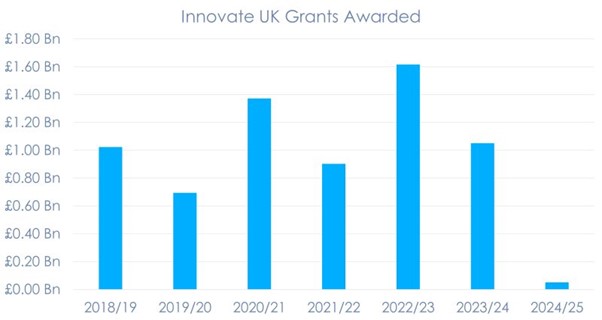
The yearly Innovate UK R&D grant investment should average ~£1.2bn, but from April 2024 to October 2024, only £50m has been awarded. It is unclear to what extent reductions to capital expenditure grant funding has been, but given the year-long delay of the £185m flagship decarbonisation fund IETF, it is likely only ~£150m of capital projects will be granted in 2024/25.
A likely reason for this absence of essential funding is the change in government, which may have only delayed funding, rather than abandoned it completely. Nevertheless, a 10x reduction in grants this financial year means competition for grants has increased greatly, so a specialist grant advisor is essential.
Despite numerous changes to the wider tax landscape, thankfully R&D tax credits have remained in place. These credits significantly boost investment in research and development, with every £1 spent on these credits leading to an additional £1.53 to £2.35 in R&D spending by UK companies. In the 2021-22 fiscal year, £7.6 billion in R&D tax relief supported £44.1 billion in R&D expenditure, driving economic growth through technological advancements. Companies that consistently invest in R&D are predicted to be 13% more productive, enhancing overall economic efficiency and competitiveness. However, changes to legislation in recent years has increased the scrutiny by HMRC and the reporting quality needed to claim funding. Working with a specialist consultant to justify the technical eligibility, not just the financial ones is essential to navigate the changing landscape. You can read more about the changes here.
Lending money to profit-making and revenue generating businesses is well established, but financing the high-R&D pre-revenue SME market is still a relatively new market. According to the British Business Bank, 43% of UK SMEs perform innovation and yet 26% of those SMEs are not-yet-profit-making. Generally, innovation loans are less expensive that venture capital and contribute to a more even way to finance a business as you do not have to give up equity. Innovate UK has started to offer loans to businesses and this trend will continue as it partners with professional debt lenders. FI Group partners with SPRK Capital, a market leader in UK venture lending, to offer businesses access to wider non-dilutive funding.
If you are wondering how to fund your business’s innovation, speak to FI Group, specialists in securing grants and R&D tax credits. Our technical and financial experts keep on top of the ever changing legislative landscape to maximise the funding you can secure, so you can grow your business. For more information on how to access innovation funding, or how the Budget may have impacted your business, speak to our team.
The UK government has introduced significant changes to the R&D tax relief rules, particularly affecting overseas R&D expenditure. These changes, effective from April 1, 2024, are part of the Finance Act 2024 and aim to encourage more R&D activities within the UK. The key aspects of these new rules include:
Restrictions on Overseas R&D Expenditure:
Qualifying R&D Activities
The definition of qualifying R&D activities remains focused on projects that seek to achieve an advance in science or technology. However, the location of these activities is now a critical factor. Companies must demonstrate that the R&D activities are conducted within the UK unless they fall under the specified exceptions.
Evidence Requirements
Companies must maintain detailed records to support claims for R&D tax relief, demonstrating where the R&D activities are conducted. This includes contracts, invoices, and other relevant documentation. The documentation should clearly outline the nature of the R&D activities, the location, and the necessity for any overseas work.
Transitional Provisions
There are transitional provisions for accounting periods beginning before April 1, 2024, allowing some flexibility as companies adjust to the new rules. During this transitional period, companies can continue to claim relief for overseas R&D expenditure under the old rules, provided the expenditure was incurred before the cut-off date.
Impact on Multinational Companies
Multinational companies with R&D operations spread across different countries will need to reassess their R&D strategies. The new rules may necessitate a shift of R&D activities to the UK or a restructuring of how R&D projects are managed and documented.
HMRC Compliance Impact on R&D Tax Claimants
In the face of ongoing economic uncertainties in 2024, businesses are increasingly reliant on R&D tax credits to fuel innovation and maintain competitiveness. This white paper examines the latest HMRC compliance statistics and their implications for R&D tax claimants, emphasising the need to adopt an in-year approach as per HMRC’s guidance released on 31st October 2023.
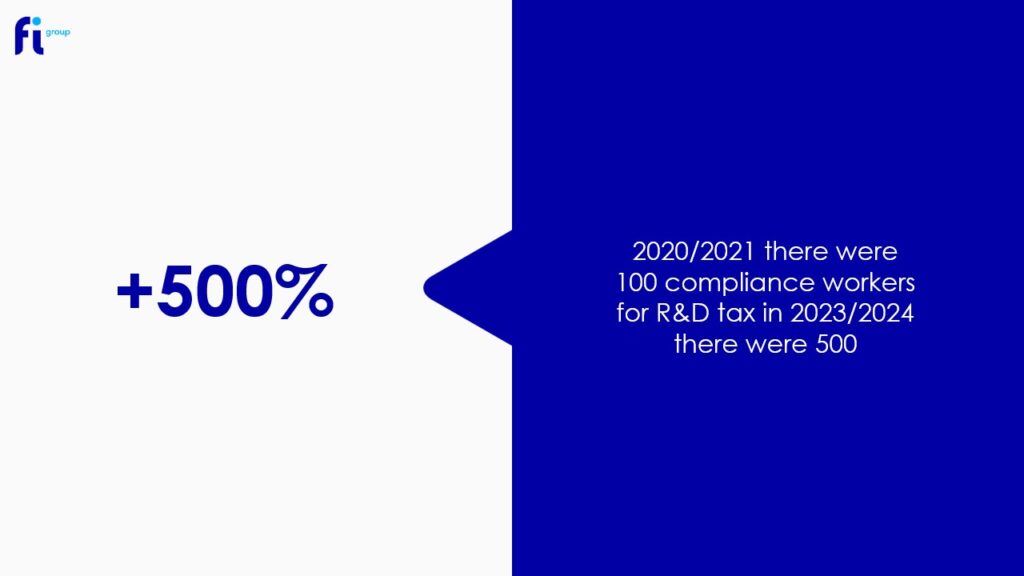
Commentary: The significant increase in compliance workforce reflects HMRC’s intensified focus on scrutinising R&D tax claims. For claimants, this means a higher likelihood of facing compliance checks, necessitating meticulous documentation and adherence to guidelines. Adopting an in-year approach can help businesses stay aligned with HMRC’s expectations and reduce the risk of non-compliance.
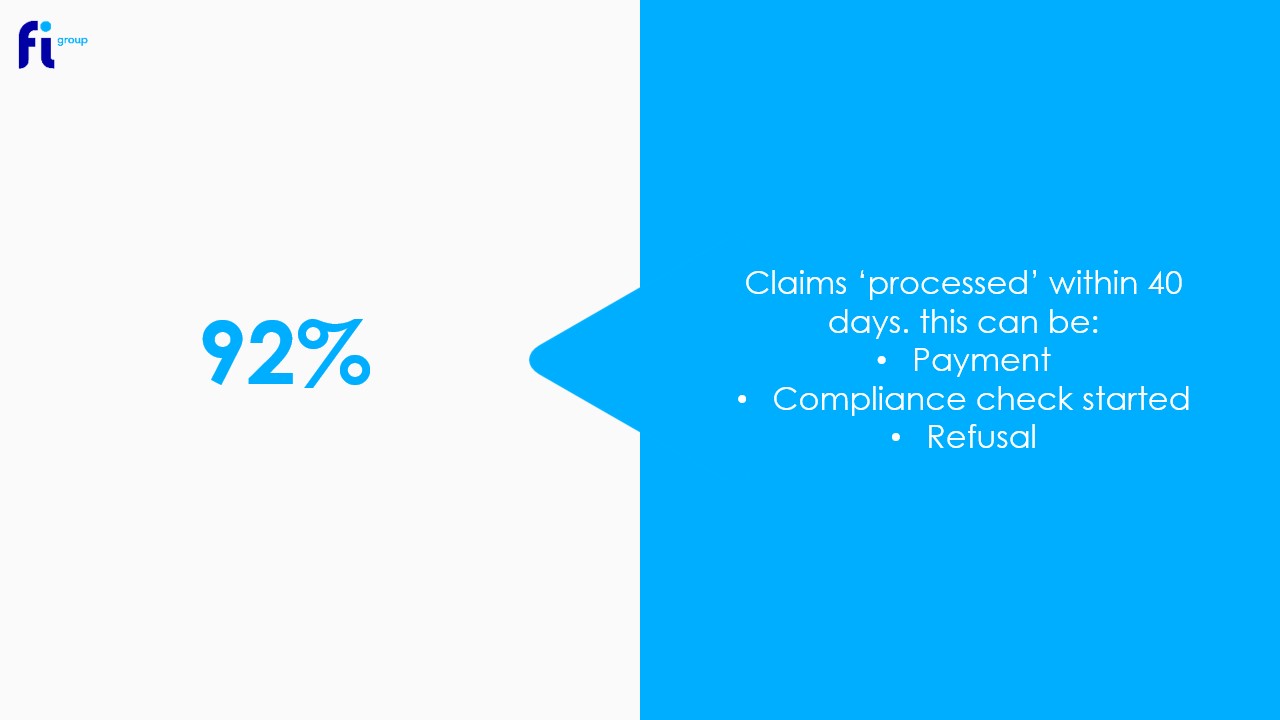
Commentary: While a high percentage of claims are processed within 40 days, the definition of ‘processed’ includes payment, compliance check initiation, or refusal. This ambiguity can create uncertainty for claimants. An in-year approach allows businesses to continuously monitor and update their claims, ensuring they are prepared for any compliance checks and reducing potential delays.

Commentary: Large companies must be particularly vigilant, as every claim undergoes deep scrutiny. This underscores the importance of robust internal processes and thorough record-keeping. By adopting an in-year approach, large companies can ensure ongoing compliance and be better prepared for HMRC’s scrutiny.
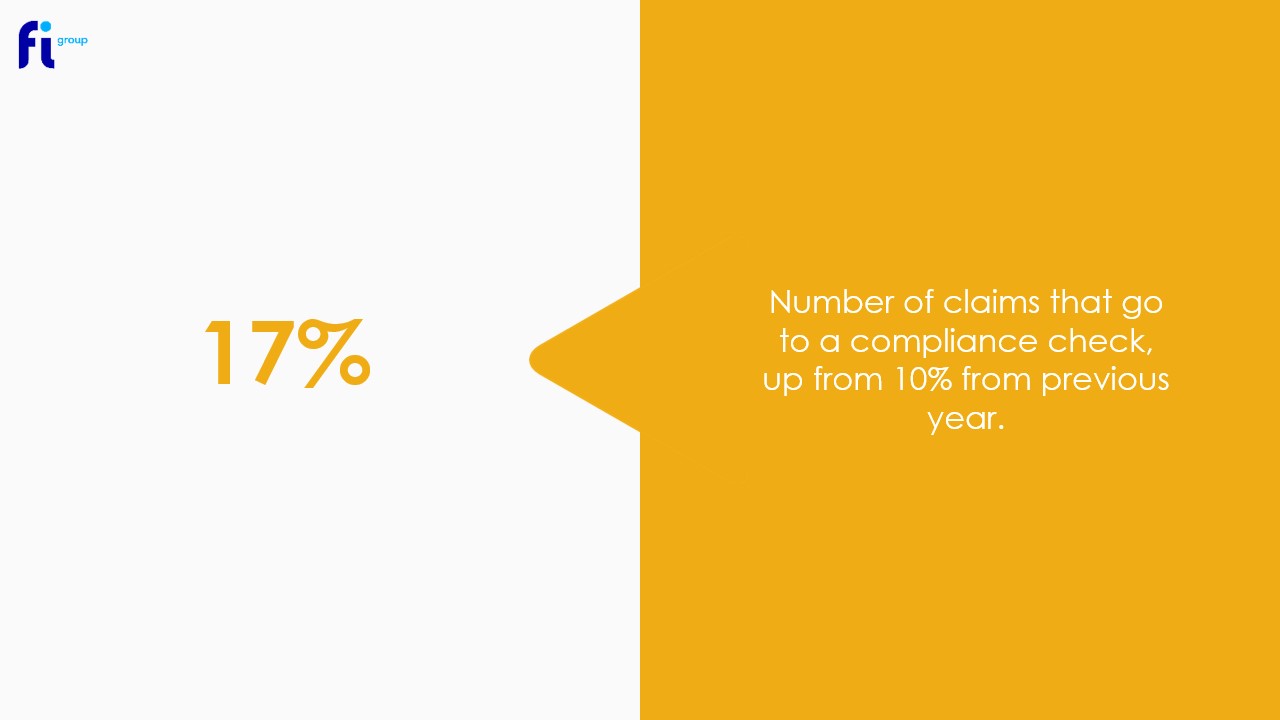
Commentary: The rise in compliance checks indicates a more stringent review process. Claimants should be prepared for increased scrutiny and ensure their claims are well-supported by detailed evidence of qualifying R&D activities. An in-year approach facilitates regular updates and reviews of R&D activities, making it easier to provide accurate and comprehensive documentation.

Commentary: The lengthy resolution time for compliance checks can pose cash flow challenges for businesses, particularly in a tight economic climate. Companies should plan for potential delays and consider the financial impact of prolonged compliance processes. An in-year approach helps mitigate these challenges by ensuring claims are continuously updated and ready for review, potentially speeding up the resolution process.
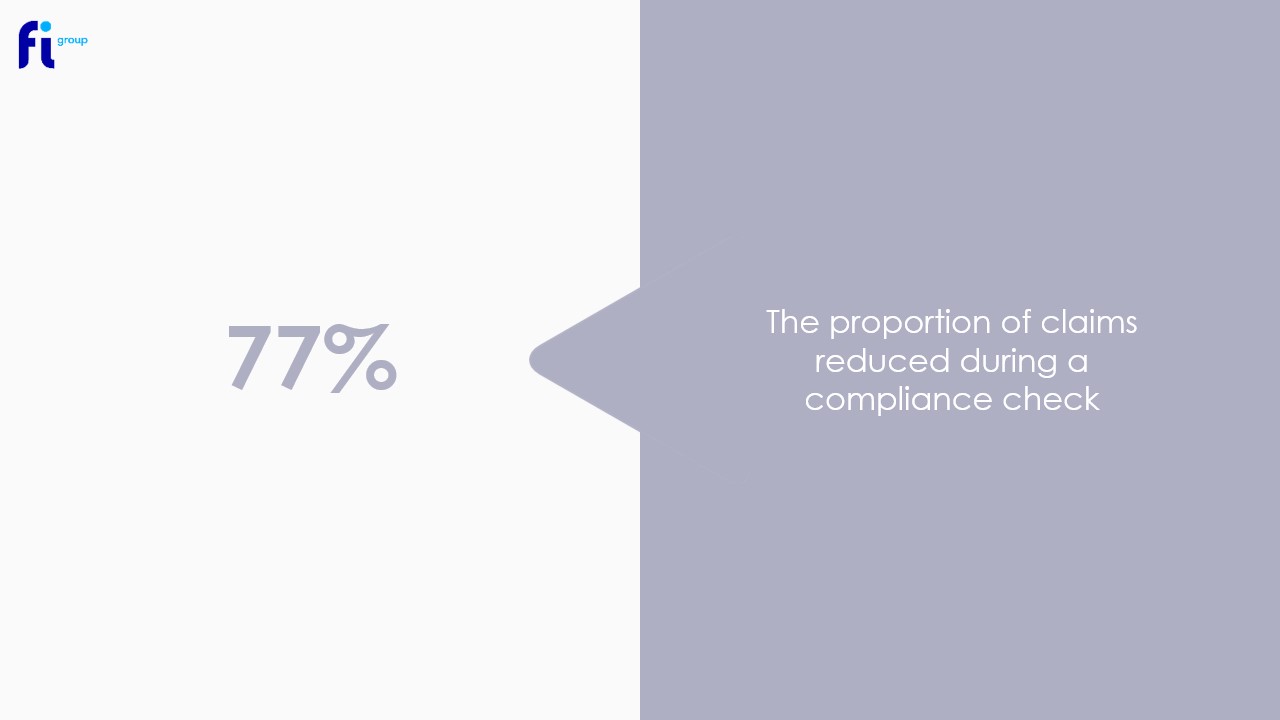
Commentary: A high proportion of claims are reduced during compliance checks, highlighting the critical need for accuracy and thoroughness in claim preparation. Businesses must ensure their claims are fully compliant to avoid reductions and potential financial setbacks. Adopting an in-year approach allows for regular verification and correction of claims, reducing the likelihood of reductions during compliance checks.
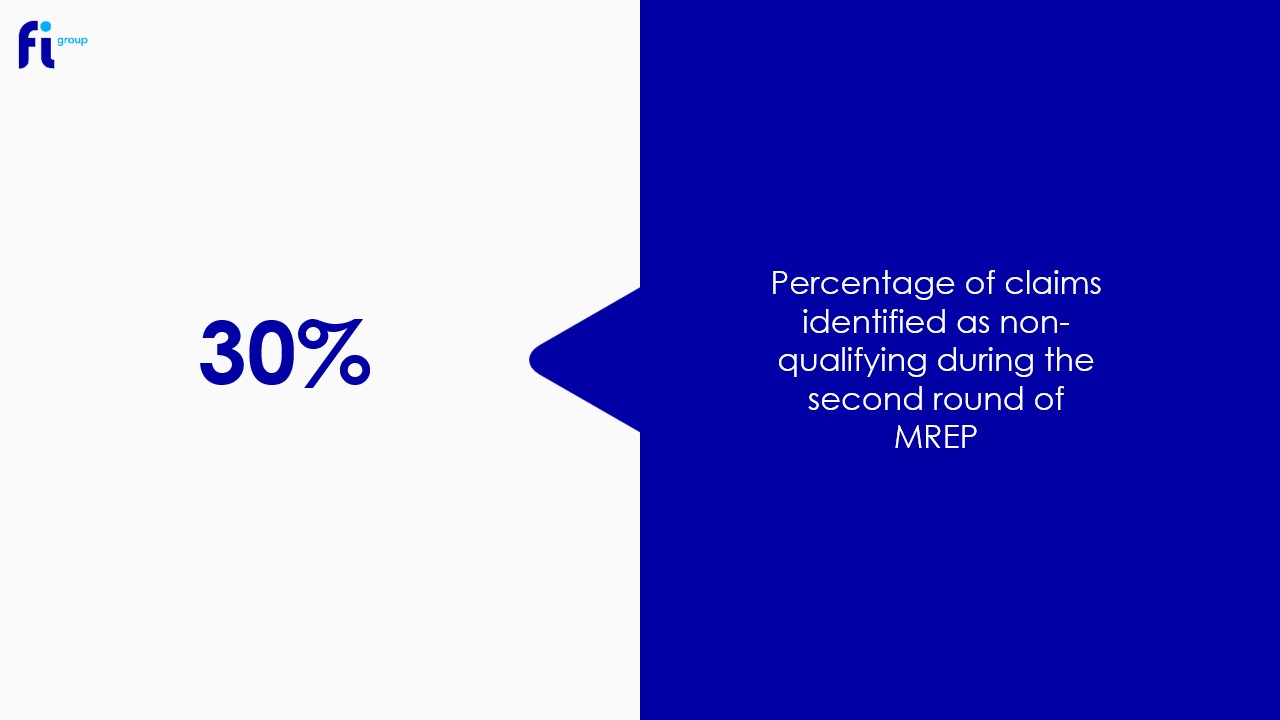
Commentary: The MREP process reveals significant issues with claim qualifications, with a notable percentage of claims being reduced or identified as non-qualifying. This stresses the importance of understanding and adhering to HMRC’s criteria for R&D tax credits. An in-year approach ensures continuous alignment with HMRC’s guidelines, reducing the risk of non-qualifying claims.
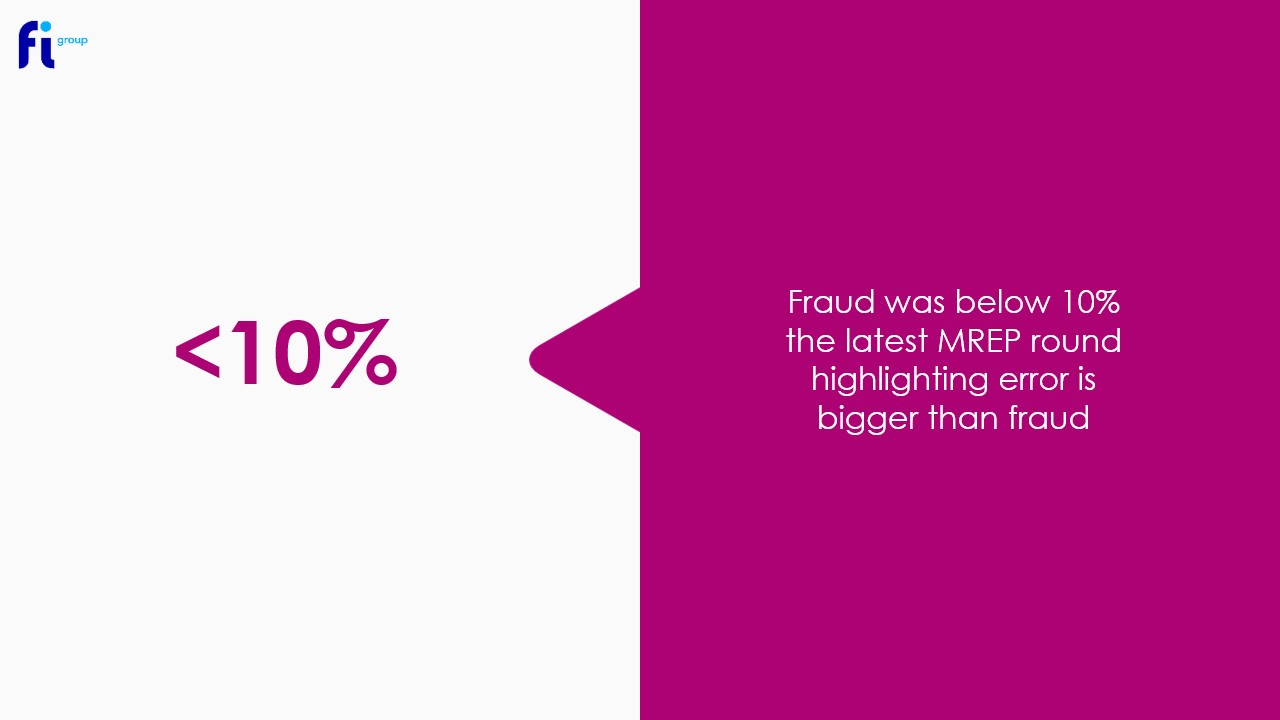
Commentary: While fraud remains relatively low, errors are a more significant concern. This suggests that many businesses may be inadvertently making mistakes in their claims. Enhanced training and guidance on claim preparation could help reduce error rates. An in-year approach promotes regular review and correction of claims, minimising errors and improving overall compliance.
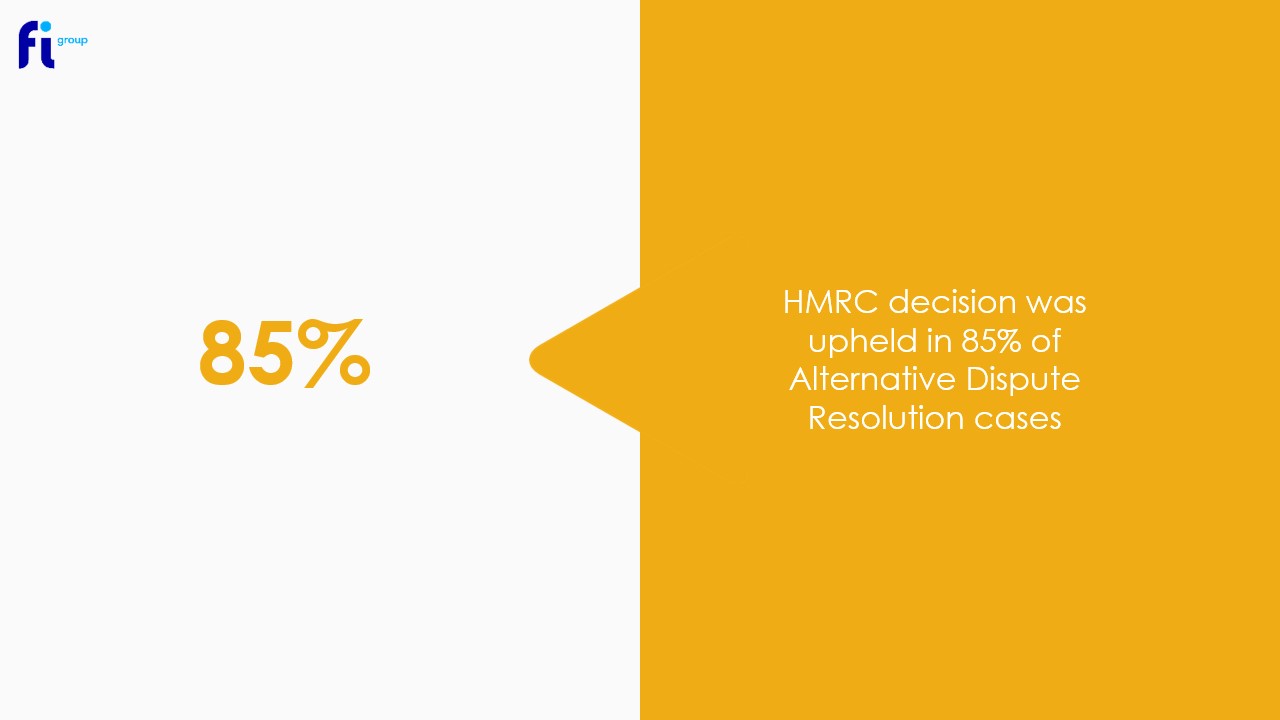
Commentary: The high rate of HMRC decisions being upheld in ADR cases indicates that HMRC’s initial assessments are generally robust. Claimants should ensure their claims are well-founded and consider ADR as a last resort. An in-year approach helps businesses maintain accurate and compliant claims, reducing the need for ADR.
The economic challenges of 2024, including inflationary pressures, supply chain disruptions, and market volatility, amplify the importance of R&D tax credits for businesses. However, the increased scrutiny and compliance requirements from HMRC necessitate a strategic approach to claiming these credits. Adopting an in-year approach, as recommended by HMRC, allows businesses to stay compliant, reduce errors, and ensure timely processing of their claims.
Navigating the complexities of R&D tax credits in 2024 requires diligence and strategic planning. By adopting an in-year approach in line with HMRC’s guidance, businesses can maximise their R&D tax benefits and support their innovation efforts amidst economic challenges.
FI Group specialises in helping businesses navigate the complexities of R&D tax claims, ensuring compliance with HMRC regulations. Our expert team provides comprehensive support throughout the entire process, from identifying eligible R&D activities to preparing and submitting claims. We stay up-to-date with the latest HMRC guidelines, including the recent emphasis on adopting an in-year approach, to maximise your claim’s success. Additionally, we offer tailored advice and strategic planning to optimise your R&D investments, ensuring you receive the full benefits of available tax incentives. Let FI Group be your trusted partner in achieving R&D tax compliance and maximising your innovation potential.
In a significant move to accelerate the adoption of cutting-edge technologies, the UK government has launched the Regulatory Innovation Office (RIO). This new unit aims to reduce bureaucratic hurdles and speed up public access to transformative technologies, from AI in healthcare to emergency delivery drones.
The RIO is designed to streamline the regulatory process, making it easier for businesses to bring innovative products and services to market. By reducing red tape, the office will help fast-track approvals and ensure that different regulatory bodies work together efficiently.
Key Objectives
Initially, the RIO will focus on four key areas of technology that are rapidly evolving and have the potential to make a substantial impact on people’s lives. These areas include:
Engineering biology involves the use of synthetic biology and biotechnology to create innovative products and services derived from organic sources. These technologies have the potential to revolutionise health with new treatments, such as innovative vaccines and contribute to environmental sustainability by creating cleaner fuels. Additionally, they can make food production more efficient and sustainable through advancements like pest-resistant crops and cultivated meat. The new Regulatory Innovation Office (RIO) will play a crucial role in helping regulators bring these products to market safely and more quickly, thereby realising the significant environmental and health benefits they offer.
The UK’s space industry is experiencing rapid growth, supporting a wide range of applications from GPS on phones to vital communication systems. New innovations are enhancing weather forecasting and disaster response systems. To sustain this growth, regulatory reform is essential for providing greater agility and clarity. Such reforms will foster competition, encourage investment and open up market access, ensuring the continued expansion and success of the space sector.
With increasing pressures on the NHS, AI is poised to revolutionise healthcare delivery. AI technologies can help doctors diagnose illnesses faster and improve patient care. They also enhance hospital efficiency by reducing the administrative burden on medical staff, thereby cutting waiting times. Furthermore, AI enables the development of more personalised medicines, tailoring treatments to individual patients. The RIO will support the healthcare sector in deploying AI innovations safely, ultimately improving NHS efficiency and patient health outcomes.
Autonomous vehicles, such as drones, have the capability to deliver emergency supplies to remote areas quickly and efficiently. Approving and supporting this technology can significantly aid emergency services in keeping people safe. Additionally, greater support for autonomous technology could enable more widespread use of drones by businesses across the UK. This builds on successful projects like the Royal Mail’s drone service to Orkney, enhancing efficiency and service delivery.
As the office grows, it will expand its support to additional sectors, ensuring that the UK remains at the forefront of technological innovation.
The RIO will work closely with industry leaders, academic institutions and other stakeholders to continuously refine and improve the regulatory landscape. This collaborative approach ensures that the regulatory frameworks remain relevant and effective in the face of rapid technological advancements. Regular feedback loops and consultations will be established to address emerging challenges and opportunities, fostering a culture of continuous improvement.
UK innovators are developing world-leading technology, but a barrier to commercial exploitation and private capital is managing the red tape. Regulations, while serving an important role, currently delays approvals for new products and services. For instance, the MHRA recently had a backlog of almost 1000 clinical trial applications earlier this year. This means patients are missing out on new life-saving medical treatments. RIO will accelerate the commercialisation process, while unlocking economic growth for the UK economy.
Fawzi Abou-Chahine – Grants Funding Director
With the Labour government committing to make the UK an attractive space for innovation investment we will be here to assist you understanding the full landscape of tax incentives and grants available to your industry. Contact us today to unlock your businesses full potential and drive your innovations forward.
As an R&D advisor, I’ve encountered numerous CFOs and CEOs who assume their R&D tax claim process is fool-proof. Due to recent HMRC policy changes, combined with an increase in compliance checks, this assumption can have negative impacts to cashflow. Some rely on past experiences with different versions of HMRC, while others trust in their advanced technology. However, HMRC’s recent findings reveal that 36% of SME claims contain errors in their random enquiry program (MREP Results). Whether we agree or not, the House of Commons estimates that approximately 20% of claims undergo scrutiny, regardless of industry.
Let’s delve into the cash flow impact and broader consequences for companies, using the example of a loss-making tech SME that raises capital from external investors:
When these factors converge, the real-world consequences become evident in:
As an advisor, I’m frustrated by CEOs and CFOs who prioritise cost over quality consultancy. While most areas of the workforce are time poor, the ROI of proper filing is indisputable. If you have questions about avoiding compliance checks, feel free to reach out to FI Group.

Over the last 3 years, the UK has experienced an emergence of R&D tax platforms. These platforms are designed to reduce consultancy fees whilst maintaining a level of security, all with specialists and R&D tax consultants reviewing the technical report and costs.
Additionally, the R&D platforms currently on the market allow accountants to automate significant parts of their process, making R&D tax more accessible to their client base. However, with 50% of existing claims falling under a £30,000 benefit, the utility of these platforms may be limited in that they prioritise the simplification of reporting. This primary focus may exclude clients from maximising their financial returns.
While automation of this calibre can provide significant value, large parts of the necessary project qualification and technical writing then falls upon client shoulders. While the integrated user experience allows for information reporting immediacy, it neglects to account for increasing HMRC scrutiny around R&D tax, potentially pausing SME payments as a result. By outsourcing technical writing to R&D tax consultants who specialise in HMRC policy, it is possible to ensure maximum returns while simultaneously accounting for shifts in policy.
When it comes to the suite of services offered by R&D tax providers, one primary element of ensuring funding is to properly filter out non-qualifying projects. When accounting for the accuracy of R&D tax platforms, filing entities must evaluate the aptitude of these platforms to act as sufficient filtering systems. Diligence in filing is essential, but diligence in determining project eligibility is a foundational aspect of R&D success. The graphic below is designed to show impact to claim size when filtering with platforms.
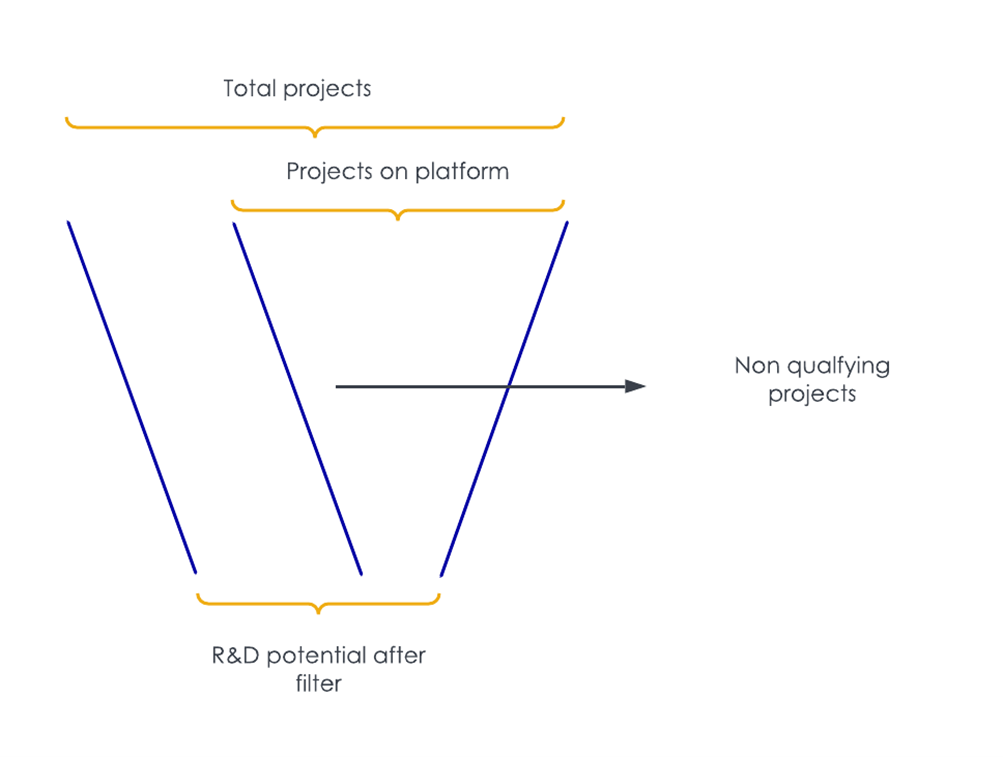
While systematically integrating technology and automated programs into R&D tax processes is an inevitability of industry progress, we must ensure that the bulk of workload is not then forced onto the client as a result of necessitating in-house data input. With consistent changes to HMRC policy, ensuring the continued use of consultancy is important when evaluating the value of reports, project success, and secured funding potential.
Time sheeting has three primary advantages in regards to claiming R&D. The first is security. HMRC, in their 2020 tribunal win against Hadee Engineering, cited that timesheet data is the ‘gold standard’ for calculating R&D percentages of staff.
This level of security goes further when the timesheet data is broken down into clearly identifiable stages within the course of a project. This then means that percentages of R&D time sheeting can be allocated as stage-dependant. For example, in a R&D project, you can typically break down the stages.
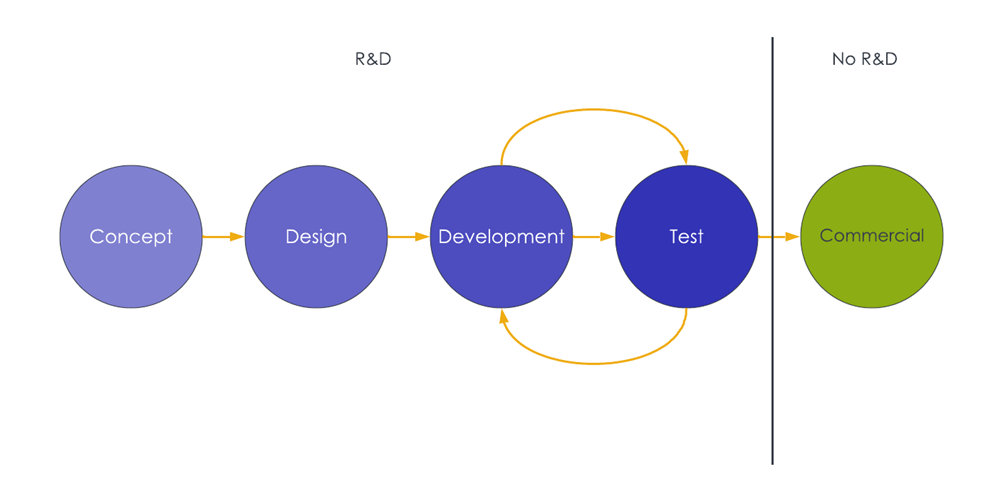
With this level of detail, you can more accurately calculate R&D at each individual stage. This data contribution provides maximised levels of security in calculating staff costs. Should an enquiry be raised by HMRC, this methodology will stand up to any inspector.
Having data readily available at each of these stages allow claims to be safely increased. Many companies neglect to track data throughout the concept stage, resulting in excluded time.
Claimants often qualify their projects at the end of the year or as their projects occur. By utilising timesheet software, claimants may be able to quickly identify projects for further discussion.
This practice removes manual excel exercises, and in some instances, meetings with providers to discuss the boundaries of R&D tax. As a result, timesheets can increase claim size, increase security, and save time.
This element of R&D, claim progress reporting, is the one area where R&D platforms have a jump on the more traditional specialists. While the client shouldn’t be qualifying projects or conducting technical writings, a shared portal where the client can see the technical report as it is created is a time-saver that avoids trite back-and-forth occurances via email.
The real value in claim progress reporting is the element of control, coupled with the ability to forecast elements of the claim. Claim progress reporting can quickly identify blockers to information gathering.
It can also allow a common portal for provider and claimant to see the claim evolve, allowing the claimant to forecast claim size. Better foresight on claim size can allow for multiple benefits:
– Delay in fundraising
– Less dilution of shares
– Speed-up in hiring
– Ability to participate in debt financing
– Facilitation of investment into CAPEX
With the introduction of the new merged R&D scheme, the ability to demonstrate who ‘owns’ the R&D has become more important. One method is to track all pre-contractual client conversations and consolidate the contract in one place. Because HMRC continuously increases the necessary tracking components, policy literacy is an ever-moving landscape. This is software can help by having a single location to upload data solely for R&D tax purposes. By proxy, this can create a place for the client and advisor to ensure required documents are easily accessible. This can be achieved through internal systems, but the limitation continues to be advisor access.
In summary, software should be utilised in R&D tax claims not to remove the human element of consultancy, but to increase immediacy in which clients can check the progress, existing data, and expediency of their claim. With the changes happening with HMRC legislation that require more structural consultancy, software should serve as support of the human element necessary for R&D filing.
Claiming R&D tax benefits within the manufacturing sector can lead to common questions on behalf of the filing entity. As a process guide, FI Group will walk through the relevant qualifications, highlight the key benefits of investing in innovation, and describe the claiming process for potential beneficiaries.
Research and Development (R&D) refers to the activities companies undertake to drive innovation that can improve their products, processes, and overall business performance. Further, R&D Investments can be defined as supporting activities where the baseline of science or technology is advanced through the resolution of scientific or technological uncertainty that was not easily foreseeable by a competent professional in that field.
When it comes to the manufacturing sector specifically, R&D efforts are focused on developing new technologies and techniques that improve the productivity, quality, and environmental impact of their production processes.
In general, there are 4 specific focus areas of R&D in manufacturing. Let’s review them one by one.
This area of R&D in manufacturing is all about improving the actual processes used to make individual products. Manufacturers may invest in R&D to develop new processing and handling methods that boost the efficiency and consistency of their operations.
For example, a company might research and test new and more effective techniques for cutting, assembling, or finishing their products in a way that reduces waste, improves quality, and lowers costs. Or they may explore the use of new, more environmentally-sustainable materials that perform better than what they’ve used in the past.
The key goals of R&D at the per unit processing level are to find ways to make each unit or product better, faster, and more cost-effective to manufacture. This helps manufacturers stay competitive by delivering higher-quality goods at lower prices.
A major focus of R&D in manufacturing is improving the equipment and machinery used on the factory floor. Manufacturers invest heavily in developing new, more advanced production machines as well as upgrading their existing equipment. They are doing this in order to improve the throughput and make the manufacturing process more affordable. For example, this could involve creating specialised robots, implementing sophisticated computer controls, or redesigning key machine components.
Upgrading equipment through R&D helps companies boost productivity, meet customer demands, and maintain their competitive edge.
This machine-focused R&D is especially crucial as manufacturers adopt Industry 4.0 technologies.
R&D in manufacturing also encompasses the broader systems and infrastructure that enable the production process. Rather than focusing on individual machines, this area of research and development looks at advancing the interconnected controls, sensors, and communication networks that underpin the entire manufacturing operation.
The goal of systems-level R&D is to create more integrated, responsive, and efficient production environments. Manufacturers invest in developing new technologies that can better monitor, coordinate, and optimise their entire manufacturing system.
This could involve innovating around the automated control systems that manage production lines, the sensor networks that provide real-time data, or the software platforms that integrate disparate systems. By improving the connectivity and intelligence of these wider systems, companies can drive significant gains in productivity, flexibility, and quality.
For example, R&D into advanced manufacturing execution systems (MES) allows businesses to centrally manage and monitor the production process. Sensor-based technologies that track machine performance and environmental conditions are another area of systems-focused R&D, providing valuable insights to improve operations.
The final focus area of R&D in manufacturing is – societal or environmental level technologies. This aspect of innovation is concerned with developing solutions that promote the competitiveness and sustainability of the industry as a whole.
Whereas the other R&D focus areas centre on improving the core manufacturing processes and equipment, this domain looks outward at supporting the workforce and addressing broader environmental challenges.
One major area of societal-level R&D is enhancing the health, safety, and ergonomics of manufacturing environments. Manufacturers invest in researching new technologies and methods that can better protect their employees and improve working conditions in the factory.
This might involve developing specialised tools or machinery that reduce physical strain, or exploring AR solutions that provide real-time guidance to workers. The goal is to create a safer, more comfortable work experience that also boosts productivity.

The scope of eligible R&D in manufacturing is broad, but here is what projects it covers:
Regardless of whether you’re pioneering innovative goods or finding ways to optimise your current processes, there’s a good chance your R&D efforts can qualify for valuable tax credits. The key is understanding how the tax incentives apply to the diverse range of innovation happening in the manufacturing sector.
Claiming R&D in manufacturing can be a complex process for any business, however, you should keep in mind that you don’t have to do it alone. Collaborating with specialists who understand how to claim R&D can maximise your chance of winning it.
The FI Group team is committed to helping manufacturers like you identify every area of eligible R&D, prepare comprehensive tax relief claims, and defend those claims against HMRC inspection. We’ve got all the needed experience to ensure you receive the full value of the incentives you’re entitled to.
We have experience working with different game developers in the UK, so we understand how confusing tax relief for video games can be. Many studios we speak with struggle to figure out eligibility criteria, certification processes, and the complex calculations involved in claiming government incentives.
Many video game developers could be missing out on significant tax savings or even cash payments from HMRC. That’s where FI Group comes in. In this guide, we will walk you through the processes involved with Video Games Tax Relief (VGTR) – from qualifying for the scheme to maximising your claim.
By the end of the article, you’ll clearly understand how VGTR works, what costs you can claim, and how to successfully submit your application.
Video Games Tax Relief (VGTR) is a government incentive that exists to support the video game development industry in the UK. It allows qualifying companies to claim a payable tax credit worth up to 20% of their core production costs.
The main idea of VGTR is to encourage investment and growth within the sector by making game development more affordable. With reduced financial burden, game studios are more competitive on a global scale. .
As for inclusion criteria, various video game genres qualify for the VGTR claim. Whether you’re developing an immersive single-player RPG, a multiplayer online battle arena, or a free-to-play mobile game, you could be eligible for this tax relief. The only stipulation is that qualifying games should be intended for commercial release to the general public. Games created solely for advertisement, promotion, or gambling purposes are excluded.
For profitable video games, tax credits can be used to reduce corporate tax bills. For loss-making titles, you can even receive a cash payment from HMRC at a rate of 25% of your qualifying expenditure. This can provide you with the needed funds to keep your development pipeline flowing.
To claim VGTR, there are a few criteria your business needs to meet.
First and foremost, your company must be registered in the UK as a video game development company (VGDC) and must be responsible for the majority of all planning, designing, developing, testing, and production.. This company must also be actively engaged in the decision-making process and directly negotiate and/or pay for the rights, goods, and services involved.
Important note: there can only be one VGDC per video game. If multiple companies are involved, the one most responsible for and engaged with qualifying activities will be designated as the VGDC.
In addition to being the VGDC, your video game must pass the British cultural test, which is administered by the British Film Institute (BFI). This points-based assessment measures factors like setting, lead characters, subject matter, and dialogue to ensure the game possesses genuine British or European cultural content and significance.
You’ll need to score at least 16 out of the possible 31 points to be certified as a “British” video game and qualify for VGTR. Don’t worry though — the criteria are quite broad, and even games with fictional or international settings can often meet the requirements.Let’s take a look at how the cultural test is broken down into four main sections:
This subsection looks at the setting of gameplay, the nationality/residence of the lead characters, the subject matter, and the language used. For example, you can earn points in the following scenarios:
This subsection evaluates how the game demonstrates creativity, heritage, or cultural diversity from a British/European perspective. Elements that reflect national customs, use British landmarks, or incorporate diverse representation can earn up to 4 points.
You can also score points for working in UK-based video game development facilities for key production activities like programming, design, audio recording, and more.
Finally, the test considers the nationalities and residencies of the key creative talent involved, including the project leads, writers, composers, artists, and programmers.
The final key criterion is that at least 25% of your “core expenditure”- i.e., money spent on designing, producing, and testing the game – must be incurred within the European Economic Area (EEA). This helps ensure the tax relief is benefiting the UK and wider European game development ecosystem directly.
As previously stated, – some games are excluded from VGTR. Excluded games include any that are produced solely for advertising, promotional, or gambling purposes. As long as your project is intended for commercial release to the general public, claiming video games tax relief is a valid consideration.

When it comes to VGTR, a key consideration is your “core expenditure” – Money you spend directly on the designing, producing, and testing of your video game. This can include things like:
The amount of tax relief you’re eligible for through VGTR is calculated as 25% of your core EEA expenditure up to a maximum of 80%. So if allcore spending took place in the EEA, you could claim up to 20% of your total development budget.
It’s important to carefully track and categorise your expenses, as HMRC will want to see a detailed breakdown of expenditures when submitting your claim. Remember, certain costs like marketing, financing, and debugging a finished game won’t qualify.
The process of actually claiming VGTR involves a few steps:
Keep in mind that you can’t claim both VGTR and the R&D tax relief on the same expenditure. So if parts of your game development qualify for R&D relief, you’ll need to decide which incentive will be more beneficial for your business.
No, there are no minimum expenditure thresholds needed to claim VGTR. As long as you meet the other eligibility criteria, companies can claim the relief regardless of the total development budget.
Yes, it may be possible to claim VGTR on additional content developed/released after the initial launch of your video game. As long as you demonstrate how this new content qualifies as further game production, it should be eligible for the relief.
The VGEC and VGTR incentives run parallel, so you have the choice of which one to apply for. Generally, the VGEC offers a higher credit rate of 34% compared to VGTR’s 20% – but the eligibility criteria and calculation methods differ, so the optimal choice will depend on the specifics of your project.
No, VGTR is beneficial regardless of whether your video game is generating profits or losses. If your game makes a profit, you can use the tax credit to reduce your corporation tax bill. If it makes a loss, you can claim a payable cash credit from HMRC at a rate of 25% for your qualifying expenditure.
The BFI aims to process VGTR cultural certificates within 28 days, provided the application is complete and no further information is required. The overall claim process through HMRC can take a bit longer, so it’s advisable to start your application early.
In the dynamic landscape of business and innovation, the accounting treatment of Research and Development (R&D) expenditures plays a pivotal role in shaping financial reporting and influencing strategic decisions. This article delves into the effect of capitalisation versus expensing on the amount of R&D expenditures for UK firms, exploring the implications of these accounting practices.
Before delving into the specifics, it’s crucial to understand the fundamental difference between capitalisation and expenses in the context of R&D expenditures.
Definition: Capitalising R&D costs involves recognizing these expenditures as assets on the balance sheet.
Implication: Capitalised costs are amortised or depreciated over time, spreading the expense recognition beyond the immediate period.
Now, let’s explore the effects of these accounting methods on the financial statements of
UK firms engaged in R&D activities.
The decision to capitalise or expense R&D costs can have strategic implications for businesses, Influencing how they are perceived by investors, creditors, and other stakeholders.
In navigating the decision between capitalisation and expensing of R&D expenditures, UK firms must carefully weigh the short-term and long-term implications. The choice made not only affects financial statements but also shapes perceptions and influences strategic decisions. As the landscape of R&D accounting continues to evolve, firms should stay informed and consider the broader impact on their financial health and strategic positioning.
Research and Development (R&D) credits and R&D capitalization represent distinct approaches to accounting for innovation-related expenditures, each with its own set of advantages and considerations.
R&D credits, often in the form of tax credits, provide immediate financial relief by reducing a company’s tax liability based on qualifying R&D expenditures. This approach allows businesses to realise tangible benefits in the short term, enhancing cash flow and providing flexibility in resource allocation. On the other hand, R&D capitalization involves recognizing R&D costs as assets on the balance sheet, spreading the expense over time through amortisation. While capitalization may enhance the long-term financial picture, it doesn’t offer immediate tax relief.
The decision between R&D credits and capitalization depends on a company’s financial goals, tax position, and strategic priorities. For those seeking immediate financial advantages and flexibility, R&D credits are often considered a more attractive option, offering timely support for ongoing innovation initiatives.
R&D tax credit programs often involve intricate eligibility criteria, intricate documentation,and changing regulations, making it challenging for companies to maximise their claims without specialised expertise.
Professionals well-versed in tax law and R&D regulations can help companies identify and leverage eligible R&D activities, ensuring comprehensive and accurate claims. Their in-depth knowledge allows for the optimization of credit calculations and the utilisation of available incentives, ultimately leading to the maximisation of financial benefits. Moreover, professionals can provide strategic advice on structuring R&D projects to align with tax credit requirements, minimising compliance risks, and fostering a seamless claim process.
By enlisting the support of professionals, businesses can focus on innovation while entrusting the intricate task of navigating R&D tax credits to experts who can unlock the full potential of available incentives.
The global call for sustainable practices has magnified the importance of research and development (R&D) in the Energy and Environment sectors. In this comprehensive exploration, we delve deeper into the thriving landscape of R&D in these sectors, shedding light on the invaluable role played by innovative enterprises.
Our focus extends to the significant R&D tax incentives that empower businesses committed to advancing clean energy, environmental stewardship, and sustainable practices.
In recent years, the Energy and Environment sectors have evolved into vibrant hubs of innovation. Enterprises are passionately investing in cutting-edge R&D projects that not only drive economic growth but also address critical challenges posed by climate change and environmental degradation.
From breakthroughs in renewable energy to pioneering eco-friendly technologies, these sectors are driving the transition to a more sustainable and resilient future.
Recognising the pivotal role of R&D in achieving national sustainability goals, the UK government offers lucrative tax incentives to businesses committed to advancing technology in the Energy and Environment sectors. These incentives not only stimulate R&D activities but also foster a culture of experimentation and progress within the industry.
Companies engaged in the development of solar, wind, hydro, and other renewable energy sources may qualify for R&D tax credits. Innovations that enhance efficiency, reduce costs, or overcome technological challenges are particularly encouraged.
R&D projects focused on CCS technologies, aimed at reducing carbon emissions from industrial processes, may be eligible for R&D tax incentives. This includes advancements in capture, transport, and storage methods.
Businesses leading the charge in waste reduction, recycling processes, and circular economy models can tap into R&D tax benefits. This encompasses innovations in waste-to-energy technologies, sustainable packaging, and efficient recycling systems.
R&D initiatives focusing on electric vehicles, sustainable fuels, and transportation efficiency contribute to a cleaner environment and may qualify for tax incentives. Breakthroughs in battery technology, energy-efficient transportation solutions, and infrastructure improvements are all areas of interest.
Understanding the complexities of R&D tax credits is paramount for businesses in the Energy and Environment sectors. Our experts at FI Group specialise in guiding companies through the intricacies of the incentive landscape, ensuring they identify and claim all qualifying expenditures. This expertise helps businesses maximise their claims, reinvest in further innovations, and contribute meaningfully to a sustainable future.
Navigating the R&D tax incentive landscape can be complex, and seeking professional assistance ensures that businesses receive the full spectrum of benefits available. FI Group offers dedicated support, leveraging our team’s extensive experience in R&D tax credit claims to streamline the process and provide robust claims for businesses committed to advancing sustainability in the Energy and Environment sectors.
As the Energy and Environment sectors continue to pioneer innovative solutions, the synergy between R&D initiatives and tax incentives emerges as a powerful catalyst for sustainable progress. Embracing these incentives not only fuels technological advancements but also positions companies at the forefront of creating a cleaner, greener future for generations to come.
In the dynamic landscape of business innovation, understanding the R&D tax credit claim deadline is pivotal for companies seeking to maximise their financial benefits. This comprehensive guide delves into the intricacies of the R&D claim deadline and sheds light on how far back companies can retroactively claim these credits.
Embarking on a journey of innovation often involves overcoming financial hurdles. The Research and Development (R&D) Tax Credit serves as a beacon for businesses, offering a lucrative avenue to recoup expenditures related to qualifying R&D activities. However, navigating the temporal aspect of claiming these credits is equally crucial.
Understanding the temporal constraints is fundamental. The R&D tax credit claim deadline varies across jurisdictions, and staying abreast of these timelines is imperative.
In the UK, for instance, companies have a window of two years from the end of their accounting period to submit an R&D tax credit claim. Failure to adhere to this deadline may result in missed opportunities.
One of the compelling aspects of R&D tax credits is the ability to retroactively claim them. In the UK, companies can retroactively claim R&D tax credits for the previous two accounting periods. This backward-looking provision empowers businesses to recoup eligible expenses that may have been overlooked in the immediate aftermath of their R&D endeavours.
Timing is everything. Strategically planning when to submit an R&D tax credit claim can optimise financial outcomes. Companies should consider factors such as cash flow needs, project timelines, and the overall financial strategy. Navigating the temporal nuances requires a judicious approach to align the claim submission with the company’s broader financial objectives.
To navigate the intricacies of R&D tax credit claims and deadlines, many companies choose to collaborate with experts. Firms like FI Group specialise in optimising R&D claims, ensuring accuracy, compliance, and timely submissions.
Our team of professionals understands the evolving tax landscape and can provide tailored guidance to maximise your R&D tax credit benefits.
The R&D tax credit claim deadline represents both a challenge and an opportunity. Staying informed, strategically planning claims, and leveraging the expertise of professionals can transform this deadline into a gateway for unlocking financial benefits. As your business continues to innovate, understanding the temporal dimensions of R&D tax credits is paramount in order to thrive in a landscape of endless possibilities.
Ready to explore the full potential of R&D tax credits? Connect with FI Group, and let our experts guide you through the intricacies of deadlines, claims, and financial optimisation. Don’t miss out on opportunities – act now and pave the way for a more innovative and financially rewarding future.
